Housing Veterans in Montreal, Brainstorming On Strategic Improvements in Brno, and Building Toward An End to Rural Homelessness

Pilot Project Finding Permanent Housing for Veterans in Montreal

HousingVeterans_Photo

The Old Brewery Mission, Quebec Veterans Foundation, and the Canadian government are collaborating on the Sentinels of the Street pilot project, intended to provide rent-subsidized, permanent, supportive housing to veterans experiencing homelessness in Montreal, Quebec. Jackie Dunham of CTV adds that supportive housing can be very beneficial to veterans; research suggests that many veterans have unique needs that stem from their experiencing in service.

Read the article here.

Brno, Czech Republic Leaders Discuss Current Efforts and Next Steps

This week, city leaders of Brno, Czech Republic met to discuss implementation of strategies to end homelessness. United States housing expert, Katharine Gale, who took part in the development of the award-winning Rapid Re-Housing project in Brno, joined the meeting while visiting the Platform for Social Housing. During the convening, leaders addressed the need for improvement of various aspects of the project, such as managing finances. “It’s great to see the city in close cooperation with non-profit organizations, overcoming barriers and finding new solutions to systemic problems,” said Gale. In 2015, IGH brought leaders from five cities across three world regions together for an convening in Brno, Czech Republic that focused on learning how to mobilize volunteers and organizing and acting on individual-level data with limited resources.

Read the article here. (This article’s original text is in Czech)

Locking Arms with States Across the U.S. to End Rural Homelessness

HousingVeterans_Header

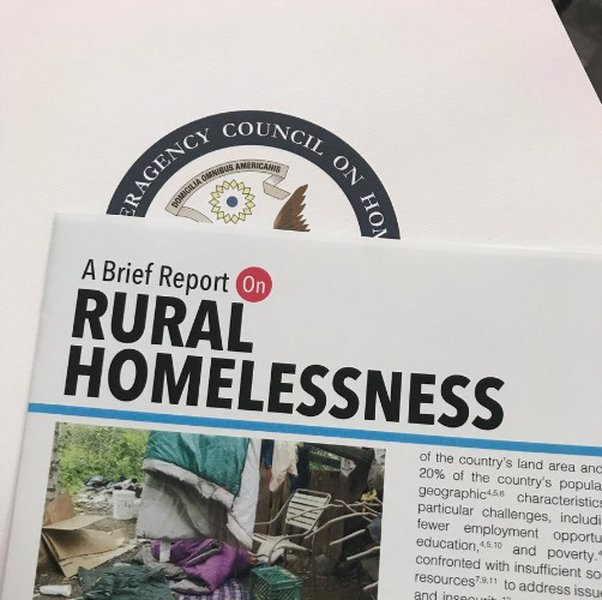
Policy Director Lindsay Knotts writes about how the United States Interagency Council on Homelessness (USICH) and the U.S. Department of Housing and Urban Development (HUD) are exploring the challenges and opportunities that rural communities across the U.S. face in ending homelessness. USICH and HUD are aiming to help strengthen peer-to-peer connections and learn how to better target federal strategies to support rural communities. The two organizations brought 15 communities together to hear from leaders from various rural communities across the country, including Alaska, Missouri, Texas, and more. Topics discusses during the convening include implementing proactive outreach and engagement; collecting and reporting data; developing innovative crisis and permanent housing models; and more.

Read the article here.

If there is news you would like to include in a future update, contact us here: http://www.ighomelessness.org/contact

The 2018 Transatlantic Practice Exchange, A New Plan to Combat Homelessness in Austin, Texas, and More

Homeless Link’s Transatlantic Practice Exchange 2018

Leaders in the United Kingdom homelessness sector will be able to apply for Homeless Link’s fourth Transatlantic Practice Exchange at the end of November 2017. The Exchange is an opportunity for senior support worker/junior manager-level staff to explore good practice in the United States. Topics proposed for the 2018 exchange include: multi-disciplinary outreach teams for rough sleepers; permanent supported housing (housing first); school liaison services preventing and responding to youth homelessness; and more. Applicants can also propose other topics that can help their organization develop its approach addressing homelessness. Find out more about the Exchange from past reports.

Read more here.

USExplores_Header

Atlanta Effectively Ends Veteran Homelessness

This week, Atlanta Mayor Kasim Reed announced that the city effectively ended veteran homelessness. According to Kristal Dixon of Atlanta Patch, Partners for HOME, the Atlanta Continuum of Care, the U.S. Department of Veterans Affairs, the U.S. Department of Housing and Urban Development, and the Atlanta Housing Authority have collaborated since the city joined the U.S. Mayors Challenge to End Veteran Homelessness in 2015. Together, they’ve created a coordinated system to identify, assess, connect and permanently house over 1,800 veterans. “Communities like Atlanta are proving that homelessness is solvable, not just for veterans, but for everyone,” said Executive Director of the U.S. Interagency Council on Homelessness, Matthew Doherty.

Read the article here.

Granada, Spain Develops Strategic National Plan to Address Homelessness

With nearly 200 people experiencing homelessness, the City Council of Granada, Spain is promoting a new and improved plan to help solve homelessness. Amira Yousef of Granada Digital reports that there are five aspects of the plan: housing first, employment assistance, inclusion in the High Tolerance Project, mental health services, and social services to connect people with relatives. The city is collaborating with RAIS Foundation and the Junta de Andalucía to house the first ten people under the plan. Yousef also discussed demographics of the people experiencing homelessness: about 75% are men, about 18% are women, and about 3% trans-men and women; much of the population is between 45 and 65 years old; and about 19.7% are immigrants. In addition, for the first time, the city provided informational guides to citizens and people experiencing homelessness.

Read the article here. (This article’s original text is in Spanish

Transatlantic_Header

New Plan to Combat Homelessness in Austin, Texas

Nancy Flores of American-Statesman explores an Austin, Texas nonprofit’s 10-year plan to tackle homelessness. This week Mobile Loaves and Fishes shared details about their upcoming efforts to expand housing and support services to those without permanent housing. The plan includes a campaign to expand their Community First village – to enable them to house 200 women and men experiencing chronic homelessness. The development will feature 120 micro-homes, 100 RVs, 20 canvas-sided cottages, a medical facility, and room for various recreational activities. “Mobile Loaves & Fishes is setting a new standard for addressing homelessness in an impactful way — not only in Central Texas, but in communities across the country,” said Austin Mayor Steve Adler.

Read the article here.

If there is news you would like to include in a future update, contact us here: http://www.ighomelessness.org/contact

Hunger and Homelessness Awareness Week, Eradicating ‘Core Homelessness’ in Scotland’s Largest Cities, and More

Hunger and Homelessness Awareness Week

Hunger and Homelessness Awareness Week (HHA) is approaching! A series of educational, service, fundraising, and advocacy events, raising awareness of homelessness, will be held across the U.S. beginning Saturday, November 11 and ending Sunday, November 19. Each year, the National Coalition for the Homeless and the National Student Campaign Against Hunger and Homelessness sponsor HHA Week. This year, over 700 organizations, churches, schools, and other groups, as well as individuals, will participate in the series of events. You can participate by attending or volunteering at an event, registering and hosting your own event, sharing knowledge about homelessness. Follow along on Twitter with #hhweek.

Find more information here.

Eradicating ‘Core Homelessness’ in Scotland’s Largest Cities

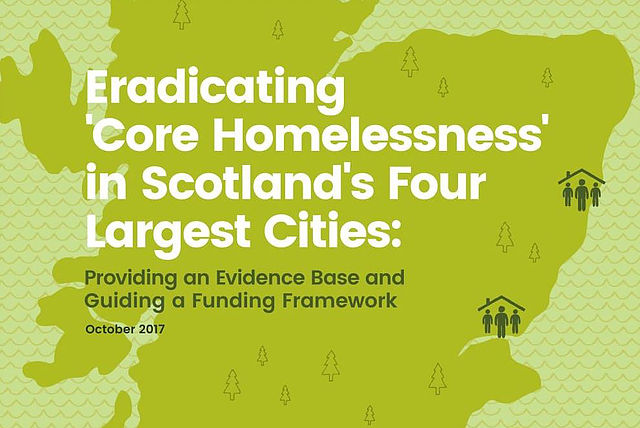
A recent study conducted by Heriot-Watt University (HWU) provides an overview of the state of homelessness in Scotland, including current policies and best practices, and a framework for the disbursement of funding that will be allocated across relevant organizations working toward ending homelessness in Scotland’s four largest cities – Glasgow, Edinburgh, Dundee and Aberdeen. “The study demonstrates that these more extreme forms of homelessness are still a substantial problem in our main urban centres, but also that it is possible for collaborative efforts to seriously drive down this persistent and distressing social problem,” said Professor Suzanne Fitzpatrick of the university’s Institute for Social Policy, Housing, Equalities Research. Fitzpatrick also added that the aim of the report is to ultimately help drive positive responses to policy. The study discusses key findings regarding age groups heavily affected by homelessness, trends in the occurrence of homelessness, and related factors – such as begging.

Read the study here.

Hunger_Header

Emerging Strategies for Addressing Racial Inequalities in Our Efforts to End Homelessness

Policy Advisor, Brittani Manzo, discusses ideas on how to better understand and address racial disparities within homelessness that emerged at the United States Interagency Council on Homelessness’s (USICH) Thought Leadership Convening on Ending Family Homelessness. According to partners from the Center for Social Innovation (C4SI), Marc Dones and Jeff Olivet, people of color, particularly African Americans and Native Americans, have a significantly greater chance of experiencing homelessness than other ethnicities. Some ways that USICH and local and federal partners suggest approaching the issue: using data to build an understanding of the scope of racial disparities and over-representation, map local stakeholders, and engage in conversations with partners to build a shared understanding of the factors that are driving the issue, develop and test strategies to reverse the dynamics identified, and more.

Read the article here.

Housing First in the Canary Islands of Spain

A housing first initiative will be introduced to people experiencing street homelessness in the Canary Islands of Spain for the first time. The local government is collaborating with various organizations, such as RAIS Fundación and the Ministry of Health, Social Services and Equality, to implement the program. According to La Opinión de Tenerife, 82% of participants are middle-aged men. The mayor of Arona, José Julián Mena, is placing emphasis on the need for more long-term, permanent solutions to homelessness, rather than temporary fixes.

Read the article here.

Hunger_Photo
If there is news you would like to include in a future update, contact us here: http://www.ighomelessness.org/contact

The State of Housing in the EU 2017, A New Goal for CAEH’s 20,000 Homes Campaign, Housing Development in Sri Lanka, and More

The State of Housing in the EU 2017

The Housing Europe Observatory, the research branch of Housing Europe, released The State of Housing in the EU 2017 this week. This year’s flagship report includes detailed housing statistics for each European Union member state, the latest housing trends in a cross-country observation, and a compilation of the most significant policy updates since the 2015 report. Some key findings include: house prices are growing faster than income in most member states; governmental response to housing challenges still needs improvement; the local government tends to generate more housing solutions than the national government. The publication also suggests that defining homelessness in quantitative terms has been a difficult task for Europe.

Read the report here.

Sleeping Rough in Christchurch, New Zealand

According to Bridget Rutherford at Star Media, a recent point-in-time count conducted by the city council suggest that about 200 people are sleeping rough at any given time in Christchurch, New Zealand. The data revealed that about 84% of the people experience street homelessness. The city council, local housing providers, social services agencies, and other local homelessness organizations have presented a housing first proposal to the Ministry of Social Development. If accepted, Christchurch Methodist Mission, Emerge Aotearoa and Comcare Trust are expected to take the lead with support from Christchurch City Mission, Te Whare Roimata and Collective for the Homeless.

Read the article here.

Salt Lake City Plans Affordable Housing Development

StateofHousing_Header

Homeless Outreach Program Director Charly Swett says that affordable housing is an especially hard thing to find in Salt Lake City. According to Lauren Steinbrecher of Fox 13, the city is exploring new affordable housing development plans to help solve the issue. A draft proposal, which includes the development of permanent supportive housing complexes for people exiting homelessness, will be reviewed by the city’s Redevelopment Agency. “The hope is that a number of those people will be in housing rather than in shelters,” stated City Council Member, Lisa Adams. The article goes into further detail about how the city proposes to allocate money from the budget.

Read the article here.

CAEH’s New Goal for the 20,000 Homes Campaign

This week, at the 2017 National Conference on Ending Homelessness, the Canadian Alliance to End Homelessness (CAEH) announced a new goal for their 20,000 Homes Campaign– to end chronic homelessness in 20 communities across Canada by the year 2020. The shift stems from lessons learned throughout the first two years of the campaign and requires the Alliance to place more emphasis on critical community strategies, such as real-time data collection and coordinated access systems, in addition to persistently housing those experiencing homelessness. “We’re learning a lot about what it takes to end chronic homelessness from our campaign communities and work with our Built for Zero partners in the US,” said Director of the 20,000 Homes Campaign, Marie Morrison.

Read more here.

Sri Lanka and India Collaborate to Build Housing

This week, Sri Lanka and India signed agreements to collaborate on constructing housing for people experiencing homelessness in Sri Lanka. The project is apart of India’s commitment to assist Sri Lanka with the development of housing infrastructure. According to Indian High Commissioner, Taranjit Singh Sandhu, construction of the housing will be led by the owner-driven model and funded by Indian grant assistance. “Until now, the Indian housing grants in Sri Lanka were limited to north, east, and tea plantation area. Now they have extended assistance to provide housing the southern district too,” stated Housing Minister Sajith Premadasa.

Read the article here.

If there is news you would like to include in a future update, contact us here: http://www.ighomelessness.org/contact

Guadalajara, Mexico Sees Decline in Homelessness, Scottish Charities Advocate Early Intervention, Singapore Releases Point-in-Time Count Findings, and More

Guadalajara, Mexico Sees Decline In Homelessness

El Informador reports that Guadalajara, Mexico, has seen significant decline in homelessness since the last City Council point-in-time count in 2015. Rubén Arroyo Ramos, head of Centro de Atención Integral a Personas en Situación de Indigencia acknowledges that there are approximately 200 people experiencing homelessness throughout the city – compared to a reported 1,200 people two years prior. Ramos places emphasis on the need for supportive services for those with illnesses, disabilities, and substance abuse.

Read the article here. (This article’s original text is in Spanish)

The Importance of Early Intervention in Reducing Homelessness

Charities in Scotland are stressing the importance of early intervention initiatives among populations at risk for homelessness. The homelessness service sector says that while community and government responses to homelessness as it occurs is important, it’s vital to have support in place beforehand to help prevent its occurrence. Homelessness agencies are calling on the government for a national audit and research on the current provision of conflict resolution services, that work to support families and ensure young people don’t end up on the streets.

Read the study here.

Street Homelessness in Singapore

Guadalajara_Header

Earlier this year, volunteers conducted a point-in-time count of people experiencing street homelessness in Singapore.Today Online reports that, according to findings released last week, a total of approximately 180 people were counted sleeping on the street during the count. The primary places people were found sleeping were in open spaces and regular spots on the street with makeshift cover (primarily categories 1(a) and 1(d) of the IGH Global Framework of Understanding and Measuring Homelessness). Interviews with individuals revealed financial hardship and difficulty commuting to work were among the most common factors leading to their experience with homelessness. Interviews also revealed feelings about a need for the government to address the issue of homelessness.

Read the article here.

Plastic Concepts: Social and Sustainable Housing Solution to Homelessness

Mercedes Galiana of Arquitectura Y Empresa explores “Conceptos Plásticos,” a 2011 project by architect Óscar Mendez. The project’s objective was to build low-cost, ecological and social housing as a solution to homelessness in rural areas. Mendez patented a system that converts recycled plastic into building blocks. In 2015, the company participated in the construction of shelter for 42 families fleeing violence in Guapi, a town in Colombia. Upon obtaining the Venture Award in 2016, the project was granted funding, allowing the company to consider international expansion. The strategy marks a possible way forward to drive reductions in street homelessness at a global level.

Read the article here. (This article’s original text is in Spanish)

How Does Homelessness Affect Voting Practices?

Much of the voting process in North American countries involves the use of a permanent address – voter registration cards and information on how, where, and when to vote is often mailed to residents’ homes, for example. How does this affect one’s ability to practice their right to vote if they are experiencing homelessness during an election? In the Canadian Observatory on Homelessness’ latest blog post, Anna Kopec from the University of Toronto shares conclusions drawn from her academic research on the barriers that individuals experiencing homelessness in Toronto, Canada face while voting. According to Kopec, processes in place that ensure individuals experiencing homelessness can vote are complex and remain relatively unknown to them.

Read the blog here.

If there is news you would like to include in a future update, contact us here: http://www.ighomelessness.org/contact

Crisis UK and Homeless Link Team Up With ‘Older Age Homelessness’ Prevention Session

Crisis UK and Homeless Link Team Up With ‘Older Age Homelessness’ Prevention Session

As part of Crisis‘ 50th anniversary, the organization is conducting a major consultation to gather evidence and opinions of UK residents and homelessness experts that will be used to inform policy change. The ‘Older Age Homelessness’ prevention session, delivered in collaboration with Homeless Link, is a segment of the consultation taking place in London on Monday, October 30, 2017 from 11:00 a.m. to 15:30 p.m.(BST). The session will aim to identify solutions to help prevent elderly people from experiencing homelessness and ensure that those who are rapidly rehoused. Crisis encourages individuals from policy and academic backgrounds in the homelessness sector to register and attend!

Find more information here.

Shelter Project Meets Opposition in Los Angeles

A City Council committee in Los Angeles raised concerns regarding the location of a 49-unit shelter, Lorena Plaza, proposed to be developed in the Boyle Heights neighborhood. The New York Times reports that opponents of the facility argue that an abandoned oil well within close proximity points to environmental hazards and that a nearby restaurant and shopping center may be a disturbance to its residents. The project is being supported by nonprofit organization A Community of Friends – who has built housing for over 2,000 people without accommodation across Los Angeles. “Nothing can happen without political support,” said Ruth Schwartz, the executive director of nonprofit homelessness advocacy group Shelter Partnership.

Read the article here.

Homelessness in Morocco

Crisis_Header

I am text block. Click edit button to change this text. Lorem ipsum dolor sit amet, consectetur adipiscing elit. Ut elit tellus, luctus nec ullamcorper mattis, pulvinar dapibus leo.Morocco’s High Commission for Planning (HCP) released data regarding the state of homelessness in Morocco from the 2014 population census. According to HuffPost Morocco, data indicated that there were about 7,226 people experiencing homelessness in that year. President of the Jood association, Hind Laidi, has raised concern about the need for more current data, suggesting that there is now an estimated tens of thousands of people living without accommodation. The HCP also provided information regarding the demographics of the homelessness population. The report indicated that the majority of this population are men (86.7%), while the remaining 13.3% are women.

Read the article here. (This article’s original text is in French)

Hamilton, Canada Will Offer Tiny Homes to Those Experiencing Homelessness

Hamilton, a city in Ontario, Canada, is moving forward with a plan to develop ‘tiny homes’ for people lacking accommodation. The plan draws inspiration from similar plans implemented in other cities, such as Detroit, Michigan; New York, New York; and Madison, Wisconsin. Matthew Green, Councilor for Ward 3 in the lower city, stated that with people relying on tents placed in old industrial areas of the city for shelter, there is an urgent need for solutions. Advocates for tiny homes argue that these smaller housing units are proven to be more cost effective overall than high-rise facilities.

Read the article here.

Over 20,000 People Receive Units in Jharkhand, India

Earlier this week, Chief Minister of Jharkland, Raghubar Das, announced the distribution of just over 20,000 housing units to people experiencing homelessness across the state through the Pradhan Mantri Awas Yojana (PMAY) initiative. India Today stated that the government will equip the units with electricity, bathrooms, water, and gas cylinders and ovens. Das also mentioned that the state has set a goal to end homelessness in Jharkhand by the year 2020. Kashmir Life reported on the state of homelessness in India in recent years in an article this week.

Read the article here.

If there is news you would like to include in a future update, contact us here: http://www.ighomelessness.org/contact

Freight Containers and Affordable Housing in Hong Kong, Housing Solutions for Young People in Europe, and More

Thinking Inside the Box: Hong Kong’s Next Effort to Solve Affordable Housing Shortage

According to the South China Morning Post, a plan to convert freight containers into living units to increase housing for those experiencing various forms of homelessness is under consideration in Hong Kong, China. Freight container units have been used for housing in places like the Netherlands, Taiwan and Australia; the Chinese government and non-governmental organizations (NGOs) are taking part in a study to examine the strategy’s feasibility in China. Meanwhile, intermediate measures to address the matter will be introduced by the end of the year.

Read the article here.

Madrid Adopts Housing First Approach

“What came first, the egg or the hen?” asked Mayor Manuela Carmena. In a blog post earlier this year, we reported that Madrid’s 2017 budget allotted funding to housing first led initiatives. Those initiatives are continuing to flourish, with an increasing number of homes being allocated to individuals experiencing homelessness across the city. As of December 1, there will be a total of approximately 135 homes available under the program. As reported in 20 Minutos, the single-person homes will be complemented by health, employment, education and social services. This week, experts from Empresa Municipal de la Vivienda y Suelo (EMVS) – the Municipal Company of the Housing and Land of the City council of Madrid, the Municipal Society Zaragoza Housing (SLU), and the Association Provivienda.

Read the article here. (This article’s original text is in Spanish)

Locked Out: Housing Solutions for Vulnerable Young People Transitioning To Independence

FEANTSA and the Fondation Abbé Pierre collaborated on a report providing an overview of affordable housing initiatives in Europe targeted at young people in vulnerable situations. As stated in the report, individuals in Europe under the age of 30 represent about 20-30% of the homelessness population in most European countries. Locked Out discusses the effects of government policies on young people’s ability to transition into living independently. The experience of homelessness among young people is different from that of other age groups; thus, solutions must be tailored to fit their specific needs.The organizations concludes the publication with implications on improving government policies that affect young people’s transition into housing of their own.

Read the report here.

Reworking Approaches to Homelessness in the U.S.

Katie Pyzyk of Smart Cities DIVE delves into the changing approaches to solving homelessness in the United States over past decades. With approximately 550,000 people experiencing homelessness, as reported by the U.S. Department of Housing and Urban Development (HUD), communities have been working to find strategies that will produce long-term solutions for those without housing. Over time, government and community leaders and organizations have begun to shift from traditional, facility-based systems that rely primarily on temporarily sheltering individuals and families to more holistic approaches that also address contributing factors. “You have to address the entirety of a household’s challenges and barriers and always work with their strengths; that’s when you can make a meaningful difference and achieve housing stability,” stated Kurt Larrick, Assistant Director of Communications for the Arlington County Department of Human Services.

Read the article here.

If there is news you would like to include in a future update, contact us here: http://www.ighomelessness.org/contact

IGH Global Framework on Homelessness

Homelessness takes many forms, yet it affects people in every country and community. Despite its global reach, the lack of a universal definition, reliable data, and targeted, preventive strategies operates as a major barrier to ending homelessness. The United Nations’ Sustainable Development Goals (SDGs) do not directly include homelessness, representing a critical gap in the global goals. Therefore, there is a pressing need to strengthen solutions through a clear, inclusive, and standardized definition of the homelessness.

The Institute of Global Homelessness (IGH) developed the Global Framework on Homelessness, a product of a collaboration from researchers, policy experts, and on-the-ground leaders from six continents. This typology includes a common characterization of homelessness, “lacking access to minimally adequate housing,” while also describing the various housing situations that fall within this definition. A country or city can determine which of these categories to include in its local definition of homelessness.

Read the Global Framework on Homelessness in your Language

Articles in Polish and Hungarian also featured the IGH Framework

By allowing us to meaningfully discuss homelessness and laying the foundation for measurement, this Global Framework helps us understand where efforts to address homelessness are succeeding. Defining the problem is a step toward informed, focused, and measurable action to end homelessness.

The three categories of IGH Framework helped inform the United Nations’s description of homelessness (2021) which characterizes this problem as more than the lack of physical housing since it also “compromises” people’s social relationships and includes individuals “living on the streets, in other open spaces or in buildings not intended for human habitation, people living in temporary accommodation or shelters for people experiencing homelessness, and, in accordance with national legislation, may include, among others, people living in severely inadequate accommodation without security of tenure and access to basic services.”

How did IGH develop the Framework?

To ensure the Framework resonated globally, IGH enlisted three international homelessness experts to guide the process. Professors Volker Busch-Geertsema, Dennis Culhane, and Suzanne Fitzpatrick agreed to draft the Framework and gather feedback.

Luckily, they had a head start. Excellent research has been done on this question, both on a regional level and a global scale. For example, FEANTSA in Europe and the European Observatory on Homelessness (EOH) developed the European Typology of Homelessness and Housing Exclusion (ETHOS) to capture the various shapes of homelessness in Europe.

Globally, researchers Graham Tipple and Suzanne Speak have written extensively on homelessness in the developing world, including the book The Hidden Millions: Homelessness in Developing Countries. At the country level, Professors Busch-Geertsema, Culhane, and Fitzpatrick compiled articles and policy papers from across the world.

In June 2015, 100 thought leaders gathered in Chicago to discuss homelessness in their home countries and give input toward the draft version of the Framework. Presentations explored Thailand, the Philippines, Russia, Canada, Argentina, Brazil, Australia, Japan, Malaysia, China, Korea, India, and the European Union. Additional feedback came from attendees from Belgium, Chile, Denmark, England, Finland, France, Greece, Hungary, Ireland, Kenya, Mexico, Netherlands, Poland, Puerto Rico, Scotland, South Africa, Spain, the USA, and Wales. We are immensely grateful to the leaders who shared their time and expertise.

How does the Framework help end homelessness?

Having a shared vocabulary enables meaningful collaboration across countries, preventing misunderstandings and miscommunication. Before the Framework was established, the lack of a common definition often resulted in time spent debating the meaning of homelessness rather than focusing on solutions.

“The reason why we are focused on a common understanding of homelessness is because it is central to having any kind of meaningful dialogue about homelessness—not just amongst researchers but also between policy-makers, practitioners, and others interested in homelessness,” said Fitzpatrick.

Additionally, the Framework provides a foundation for measuring and assessing the various dimensions of homelessness globally. While some countries do collect data, their methodologies and definitions often differ in scope and criteria, making comparisons difficult. The IGH Framework enables countries to track and meaningfully compare certain types of homelessness, even if their broader definitions vary. In many places, however, homelessness remains unmeasured, leaving the issue largely invisible to policymakers.

“A global estimate of homelessness… is important for a worldwide initiative to address the problem, and to have numbers. Numbers drive investment,” said Busch-Geertsema.

Finally, and most importantly, having a common vocabulary and ability to assess the dimensions of homelessness will set the foundation for new action to reduce those numbers globally.

Advancing an International Definition of Homelessness

IGH will continue collaborating with cities and countries to advance the use of a clear and comprehensive definition as a tool for guiding and evaluating efforts to address homelessness. The IGH Framework, in complement to practical resources, can help communities better understand the scope and nature of homelessness in their context. These categories serve as a foundation for developing concrete goals to reduce homelessness, sharing effective practice, creating space for mutual learning across countries, and mobilizing global, targeted action. 

At the global level, IGH will advance its work with the United Nations to include homelessness in the Sustainable Development Goals (SDGs) and establish a shared definition of homelessness that reflects its diverse realities and helps unify responses across regions and sectors.