
Typology of Homelessness Prevention; Domestic Abuse and Housing; and More

Homeless Link’s Transatlantic Practice Exchange 2018

The Transatlantic Practice Exchange 2018, a partnership between Homeless Link in the United Kingdom (U.K.) and the National Alliance to End Homelessness in the United States (U.S.), features a group of front line staff from the U.S.) and U.K.) homelessness sector. This year, co-production and performing arts are particular areas of focus. Some topics from the U.K. include responding to long-term street homelessness; peer support and community involvement in rural homelessness settings; and using theatre to involve people with lived experience. U.S. participants will explore coordination and multi-agency working for better outcomes in criminal justice; the impact of engaging people experiencing homelessness in the performing arts; and more. Read more on the Homeless Link website, linked below, and stay updated on the Exchange using #homelesslearning.

Read the article here.

A Typology for Homelessness Prevention

On the Canadian Homeless Hub blog, Riana Fisher discusses the typology of homelessness prevention, consisting of five categories aimed at organizing various activities necessary to prevent homelessness. It addresses the legislation, policies, funding, collaborative practices, service delivery, and interventions vital to prevention. Structural prevention reduces systemic factors that contribute to housing instability and social exclusion – focusing on the population at various levels. Systems prevention focuses on the role of public systems, which can be broken down into three components: fixing policy and procedural barriers; enhancing access to public systems, services, and appropriate supports; and reintegration supports. Early prevention consist of policies, practices, and strategies targeted at individuals and families at great risk of, or who have just entered homelessness. Evictions prevention, aimed at protecting those at risk of eviction, begins with landlords-tenant rights and responsibilities. Lastly, housing stability is a tertiary form of prevention that assists people who have experienced homelessness with achieving and maintaining stable housing.

Read the blog here.

The National Conference on Ending Homelessness and Capitol Hill Day

The United States National Alliance on Ending Homelessness expects to gather 2,000 attendees in Washington D.C at the National Conference on Ending Homelessness and Capitol Hill Day. The events will be held Monday, July 23 through Wednesday, July 25, 2018. Participants will have a chance to learn about and discuss topics such as housing programs and support services; system and practice strategies; and Rapid Re-housing. The events will also allow for networking with other attendees and meeting with members of congress and staff to discuss efforts toward ending homelessness. Early registration is now open!

Register here.

Domestic Abuse and Housing: Bringing Together Research and Practice

Dora Welker, postgraduate researcher at Heriot-Watt University in Scotland studying domestic abuse, poverty and homelessness, reflects on the Domestic Abuse and Housing: Bringing Together Research and Practice conference that addressed the relationship between domestic abuse relationships and access to housing. During the conference, convened by the Chartered Institute of Housing and the University of Essex’s Centre for Criminology, she learned the significance of access to suitable housing in facilitating a woman’s decision to leave a domestic-violent relationship. On Heriot-Watt’s I-SPHERE and Urban Institute blog, she discussed the emphasis placed on the role of landlords in supporting tenants seeking to compromise housing agreements in order to flee such relationships. Welker also shares lessons about incorporating housing in a coordinated community response to domestic violence, drawing on interviews with individuals within the housing service sector.

Read the blog here.

If there is news you would like to include in a future update, contact us here: http://www.ighomelessness-org-416414.hostingersite.com/contact

Cisco and Destination: Home Join Efforts; Homelessness in Austria; and More

Cisco to Provide Destination: Home with Funding to Help End Homelessness in Santa Clara County

Destination: Home has announced that they will be partnering with Cisco – leader in internet technology and networking, to help end homelessness in Santa Clara County, California. Cisco will fund $50 million to leverage existing public resources over a five-year span. The county plans to build more housing for its most vulnerable residents, improve technology capacity throughout the homelessness services sector, and invest in sound, evidence-based practices to help individuals and families in need of support and stability. There are approximately 7,400 people experiencing homelessness across Santa Clara. Destination: Home says that this partnership with Cisco represents a unique opportunity for the community.
“We can put an end to homelessness in Santa Clara County and there is no better partner in this work than Destination: Home”, said Cisco’s Chairman and CEO, Chuck Robbins.

Read the press release here.

Financial Homelessness Prevention

Financial strain often plays a significant role in one’s pathway to homelessness. On the Homeless Hub blog, Abe Oudshoor explores financial support as a primary mode of preventing homelessness. According to an analysis of data from the Homelessness Prevention Call Center, rather than offering an in-house support program, linking callers to funds from different programs and organizations led to a statistically significant reduction in one’s risk of entering emergency shelter at every month across a one-year span. In addition, the cost of homelessness prevention for one person was nearly half of the estimated cost to support someone experiencing homelessness. Overall, the study demonstrates the effectiveness of financial support for primary prevention of homelessness.

Read the blog here.

Homelessness in Austria: A seismograph for inequality

Cisco_Header

In a recent interview, Managing Directors of Neunerhaus, Elisabeth Hammer and Daniela Unterholzner, discuss the state of homelessness across Austria. Over past years, homelessness has increased, especially among individuals 29 years old or younger. There is also a growing risk of homelessness among Austria’s middle class. Hammer and Unterholzner also discuss efforts in place to combat homelessness throughout the country, including Vienna.

Read the interview here. (The original text is in German)

If there is news you would like to include in a future update, contact us here: http://www.ighomelessness-org-416414.hostingersite.com/contact

FEANTSA and Fondation Abbé Pierre Analyze Housing Exclusion in Europe; Professor Sarah Johnsen Gives Insight on Housing First; and More

FEANTSA and Fondation Abbé Pierre’s Third Overview of Housing Exclusion in Europe

Since 2015, the European Federation of National Organisations Working with the Homeless (FEANTSA) and the Fondation Abbé Pierre have collaborated to produce an annual report that examines the latest Eurostat data and other aspects of housing in Europe. The 2018 Overview of Housing Exclusion in Europe discusses the state of homelessness, particularly among children, women and migrants, including profiles on homelessness in certain European countries. According to the report, housing exclusion is still a fast-growing problem that leads to saturation of support systems, as well as increased pressure on emergency services. The organizations propose that the European Union strengthen their decision-making role in regards to coordination, follow-up and support of Member States in bringing about the right to housing for all to combat such growing issues.

Read the report here.

Why Does Housing First Work?

Professor Sarah Johnsen opens her discussion about the efficiency of Housing first by asking: “what is it about Housing First that fosters such positive housing (and other) outcomes for a group who has traditionally been poorly served by mainstream provision”?

First, she looks at research on the prevalence and nature of adverse childhood experience (ACE) among individuals experiencing homelessness, and how they tend to respond to support services. She suggests that many times, service providers assume that everyone can make use of support in a straightforward, anxiety-free, way; however, people can be quite phobic of it. Housing first is one of a number of approaches that function as a more personalized, psychologically-informed, method of addressing homelessness. Johnsen points to four key components that underpin the success of housing first: 1) the longevity of secure housing and support; 2) flexibility of support; 3) ‘stickability’, which allows for trust and receptivity; and 4) normality of the type of housing participants are matched with.

Read the blog here.

Breaking Barriers: Homelessness and Employment in Calagary, Canada

Nick Falvo of the Calgary Homeless Foundation draws several conclusions about the links between homelessness and employment in Calgary, a city in Alberta, Canada. Inadequate income assistance programs, major health challenges and a lack of subsidized child care all pose as barriers to employment for people experiencing homelessness. According to Stephen W. Hwang’s Homelessness and Health article, referenced in the blog, people without housing develop disabilities more commonly seen among people decades older than them, which can negatively affect their capacity to work. He also mentions employment-readiness programs throughout the city that can help combat the issues mentioned. These programs offer a range of services – interview skills, employment strategies, resume writing, financial literacy, and more.

Read the blog here.

Mayor of Atlanta, Georgia, Keisha Lance Bottoms, has announced her participation in the Mayors and CEOs for U.S. Housing Investment – a first-of-its-kind alliance between local government and business leaders. The initiative currently consists of 16 mayors and CEOs from across the United States, advocating for federal investment in affordable housing and homelessness services. Since 2015, the city has seen a 34% decline in street homelessness and a 44% decline in chronic homelessness.

“With the assistance of our business community, local leaders can speak with a louder voice and discover innovative ways to improve the quality of life for the people we serve,” said Mayor Bottoms.

Read the article here.

Abbe_Header
If there is news you would like to include in a future update, contact us here: http://www.ighomelessness-org-416414.hostingersite.com/contact

Homeless Link’s 2017 Report; The Public Health Model of Homelessness Prevention; and Australia’s National Homelessness Conference 2018

Homeless Link’s 2017 Report

Homeless Link’s Annual Review of Support for Single Homeless People provides insights into England’s homelessness sector. The report aims to provide a comprehensive picture. The range of activities and interventions that are offered throughout the country, from life skills training, financial advice to substance abuse services. Research shows that despite challenges with resources, services providers continue to respond to people’s needs as best they can. The report also reflects on long-term support provided to individuals, demographics of the populations receiving support, and more.

Read the report here.

Homelessness Prevention: The Public Health Model

Riana Fisher’s blog at the Homeless Hub begins with a quote from Peter Jacobson: “If we want to stop people dying on roads, we invest money in seatbelts, not in the emergency department. In the same way in regards to homelessness, why would we wait to intervene with a young person when they’re in crisis, when we can intervene early and keep them at home, and in school and engaged?”

The blog uses these questions as a jumping off point for a discussion of the Public Health Model of Homelessness Prevention. This model can be helpful in altering the way the service sector can respond to homelessness. Intervening before an individual or family loses housing requires collaborative efforts among several sectors and systems – healthcare, education, justice, etc. Fisher also outlines risk factors of homelessness and levels of prevention, as well as the populations they aim to serve.

Read the blog here.

The National Homelessness Conference 2018 in Australia

HomelessLink_Header

Australia Housing and Urban Research Institute (AHURI) and Homelessness Australia (HA) have partnered to hold the National Homelessness Conference 2018 — Ending Homelessness Together. It will be held Monday, August 6 through Tuesday, August 7, 2018 in Melbourne, Victoria, Australia. According to AHURI, this year’s convening will be significant, with the recent release of data from the 2016 census, conducted by the Australian Bureau of Statistics, and the development of a new National Housing and Homelessness Agreement. AHURI and HA aim to bring together policy makers and practitioners from across Australia to learn, engage and network together.

Register here.

If there is news you would like to include in a future update, contact us here: http://www.ighomelessness-org-416414.hostingersite.com/contact

Homeless Hub Discusses Women and Youth Homelessness; a Recent Census in Bogotá, Colombia; and More

Homeless Hub: The women left behind

On the Homeless Hub blog, Abe Oudshoorn of Western University discusses unique experiences and support needs of women and youth experiencing homelessness in Canada. Many times, women’s pathway to homelessness is unique to that of other groups. With this follows the need for unique support, such as safety measures from gender-based violence and support to address trauma surrounding child apprehension. One unique measure of support needed for mothers experiencing homelessness is assistance with reconnecting with their children. As for youth, according to A Way Home Canada and The Canadian Observatory on Homelessness, nearly 60% have had contact with the child welfare system. Inadequate care within this system can increase their vulnerability to homelessness. Oudshoorn highlights the importance of the consideration of such needs within the homelessness service sector, in regards to both primary prevention and permanent solutions to homelessness.

Read the blog post here.

Declining Homelessness in Lexington, Kentucky

Christy Bollinger of WTVQ reports that homelessness in Lexington, Kentucky is the lowest it has been since 2005. Mayor Jim Gray thanks the great network of local agencies working in the homelessness service sector for the progress made, such as the Office of Homelessness Prevention and Intervention. Since 2014, the city has focused its efforts on more permanent solutions, realigning over $1 million in federal housing funds from transitional housing to permanent housing.

Mayor Gray: “We’ve still got work to do, but we’re making progress. Our work and investments are beginning to pay off.”

Read the article here.

Homelessness in Bogotá, Colombia

HomelessHub_Header

Data from a census conducted in October and November of 2017, suggests that about 9,538 people were experiencing street homelessness in 19 locations across Bogota, Colombia. Mártires, Santa Fe, and Kennedy were there areas found to have the most people living on the streets. The El Espectador reporter states that in comparison to previous years, this number has not changed significantly.

“With the figures obtained, we will be able to focus our attention on this population, because we will know first hand what their needs are and we can act with greater efficiency and opportunity,” said Social Secretary, Cristina Vélez Valencia.

Read the article here. (This article’s original text is in Spanish)

If there is news you would like to include in a future update, contact us here: http://www.ighomelessness-org-416414.hostingersite.com/contact

Progress in Odense, Denmark; SPARC Report on Race and Homelessness in the US; Free Houses in Kerala, India; and More

Odense, Denmark Credits Housing First for Reduction in Homelessness

Data from a recent survey shows that over the past two years, the number of people experiencing homelessness in Odense, Denmark, decreased from 173 to 113. Tommy Byrne of Dagbladet Holstebro states that of the 317 people who were housed between 2011 and 2017, over 92% sustained permanent housing. Tom Ronning, Odense’s Housing Strategic Consultant, gives credit to the housing first model for the recent reduction. The municipalities allocate vulnerable residents to 25 percent of the vacant leases outside the waiting list for the non-profit housing associations.

Read the article here. (This article’s original text is in Danish)

SPARC Releases Report on Race and Homelessness in the United States

In September 2016, the US-Based Center for Social Innovation launched SPARC (Supporting Partnerships for Anti-Racist Communities) to understand and respond to racial inequities in homelessness in the U.S. SPARC released its Phase One study findings this week, which highlight and suggest responses to racial inequities in homelessness.

Approximately two-thirds of people experiencing homelessness in SPARC communities were Black (64.7%), while 28.0% were White. 6.9% identified as Hispanic/Latinx. In total 78.3% of people experiencing homelessness were people of color. By comparison, the general population of the U.S. was 73.8% White, 12.4% Black, and 17.2% Hispanic/Latinx.

Read the report here.

On the IGH Hub: Toolkit for Pregnant Women Experiencing Homelessness

St. Mungo’s, in collaboration with the City of Westminster, has developed a toolkit to address the needs of women experiencing homelessness. The toolkit discusses improvement of health and development outcomes for women experiencing homelessness and their babies; the promotion of good practices to assist women with complex social needs; and quality service and a consistent approach to all women experiencing homelessness. In addition, increased support and guidance for staff working this population is encouraged. According to St. Mungo’s and the City of Westminster, there is not robust data on the incidence of pregnancy among women experiencing homelessness.

Find the toolkit here.

More Details Revealed in Plan to Provide Free Houses in Kerala, India

Nidheesh M.K. of Live Mint explores the government’s plans in Kerala, India to build small, 500 sq ft houses for the state’s homeless residents. The state plans to accommodate the homelessness population with the use of the Pradhan Mantri Awas Yojana (PMAY) welfare program. As for housing not eligible to be provided under PMAY assistance, the Kerala government and local governments will join efforts to support the plan financially. The government plans to build about 176,000 free homes throughout 2018 and 2019.

Kerala chief minister Pinarayi Vijayan told the state assembly that 513,000 people have been identified as beneficiaries of the housing project.

Read the article here.

Orange County United Way Launches Homelessness Initiative

Odense_Header

Orange County United Way launched a new initiative to address homelessness in Orange County, California that will be supported by a leadership council of local business leaders. The effort aims to gather information on the state of county-wide homelessness and identify both short-term and long-term housing solutions. A recent study commissioned by the University of California, Irvine, Orange County United Way and Jamboree Housing Corporation, analyzed homelessness across the county, including contributing factors and cost effectiveness of various solutions to the issue.

“Today in this room, among all of you, is the power to change many lives. I’m just one success story. There are hundreds of others out there waiting to be told” said Robert Morse, a California resident who shared his story of lived experience and recovery from homelessness.

Read the article here.

If there is news you would like to include in a future update, contact us here: http://www.ighomelessness-org-416414.hostingersite.com/contact

Housing First in Integrated Strategies in the U.K., Housing Support After Incarceration in Australia, and More

Using Housing First in Integrated Homelessness Strategies

In Using Housing First in Integrated Homelessness Strategies, Nicholas Pleace explores various aspects of the housing first model in the United Kingdom. The report assesses the evidence base for the housing first model and other homelessness services, considering effectiveness and cost-efficiency; analyzes the potential for integration of homelessness prevention strategies; and considers how lessons from various models might be utilized to maximize effectiveness of homelessness services as a whole. Among his findings, Pleace suggests that housing first programs with a greater level of funding, provided on a sustained basis, have shown the greatest success.

Read the report here.

The 2018 Canadian National Conference on Ending Homelessness

The Canadian Alliance on Ending Homelessness (CAEH) expects to gather about 1,000 participants from across Canada at the 2018 National Conference on Ending Homelessness. The conference will feature six focus areas: leadership, planning and practice; indigenous homelessness; women’s homelessness; housing first; A Way Home – Youth Homelessness; Canadian Observatory on Homelessness – Research and Policy. CAEH is inviting proposal submissions for presentations on those topic areas. Registration to attend the conference is open!

Register here.

The Revolving Door Between Homelessness and Imprisonment

Sophie Russell, Research Associate at the University of New South Wales, examines correlations between homelessness and incarceration in Australia. Data from the Australia Institute of Health and Welfare (AIHW) and the New South Wales Justice Health Survey suggests that while experiencing homelessness increases a person’s risk of imprisonment, imprisonment also increases a person’s chances of experiencing homelessness upon release. According to a 2016-17 annual report from AIHW, the number of people seeking access to homelessness services following release from prison has almost doubled in the past six years. Russell’s conclusions: access to stable housing after serving time in prison is key to ending a cycle of repeat offenses and repeatedly experiencing homelessness.

Read the article here.

Read the full report here.

The Role of Violence in the Lives of Women Experiencing Homelessness

A new report by the D.C. Interagency Council on Homelessness gathers information about the lives of women experiencing homelessness in Washington D.C., USA — specifically the effects of violence on their pathways to homelessness. Michael Alison Chandler of the Washington Post explores its findings.

According to the 2017 D.C. Women’s Needs Assessment Report, three out of four women experiencing homelessness in the city are survivors of violence, with 31% reporting it as the leading factor of their homelessness. Washington D.C. are survivors of violence. Advocates say that implications for improving responses to this population so of women can be drawn from the report, such as providing safe housing and more therapeutic support services.

Read the article here.

If there is news you would like to include in a future update, contact us here: http://www.ighomelessness-org-416414.hostingersite.com/contact

Depaul Ireland Extends Housing, The Y-Foundation Shares Insight on the Finnish Housing First Model, and More

Depaul Ireland Extends Housing for Almost 600 People

Evelyn Ring of the Irish Examiner reports on Depaul Ireland’s efforts to more permanently house nearly 600 people experiencing homelessness. CEO of Depaul Ireland, Kerry Anthony, says that the organization wanted to take a different approach to tackling to homelessness, beyond emergency accommodation. Of the 593 people who Depaul provided more suitable accommodation, 419 moved to supported temporary accommodation last year.
“It shows a pathway out, even if it is a complex and flawed one,” said Anthony.

Read the article here.

A Home of Your Own: Housing first and Ending Homelessness in Finland

The Y-Foundation has published a book outlining the country’s successful approach to reducing homelessness. A Home of Your Own: Housing first and Ending Homelessness in Finland includes recent figures of homelessness, strategies behind their efforts, and next steps in continuing to combat homelessness. This book describes the Finnish way of reducing homelessness, the special characteristics of the Finnish Housing First model, and its differences in comparison to the American Pathways Housing First model. It also gives voice to those with lived experience of homelessness who are now permanently housed because of the housing first approach.

Read the report here.

DepaulIreland_Graphic

The State of Street Homelessness in Londrina, Brazil

DepaulIreland_Header

Bonde explores the state of street homelessness in Londrina, Brazil. According to the technical-administrative advisor of the Municipal Department of Social Assistance, Priscila Brazão, there are an estimated 500 people experiencing street homelessness in Londrina, most prevalent among men age 18 to 39. Agencies throughout the city are joining together in an effort to conduct a count to obtain the most current measures.

Read the article here. (This article’s original text is in Portuguese)

Centering Youth of Color and LGBTQ Young People in Efforts to End Homelessness

“When we understand who experiences homelessness, we are led beyond the question of what scale of response is needed to end youth homelessness,” said Megan Gibbard Kline, Director at A Way Home America. Data from the Chaplin Hall’s Voices of Youth Count Initiative suggests that African American and Latino youth have a higher risk of experiencing homelessness. Analyzing the groups who are most vulnerable to homelessness can improve prevention efforts – allowing leaders and service providers to evaluate programs to ensure they meet the needs of such groups. This may mean considering the most vulnerable groups first when formulating solutions.

Read the article here.

If there is news you would like to include in a future update, contact us here: http://www.ighomelessness-org-416414.hostingersite.com/contact

Homelessness and Internet Cafés in Tokyo, Meters to Fund Outreach in Los Angeles, Consultation on Youth Homelessness in Canada, and More

“Internet Café Refugees” in Tokyo, Japan

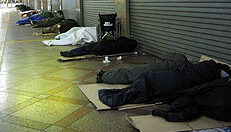
Sakura Murakami of the Japan Times explores the findings of a recent survey on homelessness conducted by the Tokyo Metropolitan Government. The survey, conducted from November 2016 through January 2017, probed 502 24-hour internet and manga cafes in Tokyo and the customers that occupy them. According to the findings, of the 15,000 people who occupy the cafes during the week, about 4,000 are experiencing homelessness and use the cafes as a means of shelter. Metropolitan government spokesperson, Hiroyo Watabe, suggests that the high number of people in their 30s experiencing street homelessness may be the result of the 2008 global financial crisis, while the large number of middle-aged people captured within the survey may have a difficulty finding employment.

Read the article here.

New Meters in L.A.’s Grand Park Will Fund Homelessness Outreach

“This is a way for people to give. And it’s going to be right before them when they’re walking down the street,” said Councilman Jose Huizar. Emily Alpert Reyes reports on a new effort to support homelessness outreach work across Los Angeles, California. A number of machines, that resemble parking meters, are being installed across L.A. to collect donations to support the City County Community program. In addition to the donations given from local residents and visitors, the meters will generate money through sponsorships that cost $3,500 annually.

Read the article here.

Rough Sleeping in Watford, England Decreased By Half

Findings from the most recent point-in-time count conducted by Watford Borough Council, New Hope, and Homeless Link, indicate that rough sleeping has reduced in Watford since last year. Councilor Peter Taylor attributes the stable decline to collaborative efforts among local leaders and service providers. In particular, the Watford Strategic Homelessness Forum was assembled for the exchange of knowledge about homelessness and solutions to drive reductions.

Read the article here.

Seoul City, South Korea Reports 82% of Those Who Received Temporary Housing Support Still Housed

According to Notched News, over 1,000 people experiencing homelessness received temporary housing support from Seoul City in 2017. Yang Seungjin reports that of these, 82% have maintained stable housing since the end of their six-month housing support period. In addition, the city provided public and private jobs to about 239 people.

Read the article here. (This article’s original text is in Korean)

InternetCafe_Photo

Learning From Youth with Lived Experience of Homelessness in Canada

InternetCafe_Header

In the Canadian Observatory on Homelessness’ (COH) latest blog, Kaitlin Schwan, shares takeaways from Canada’s national consultation on youth homelessness prevention. The consultation sought to help determine what it would take to prevent homelessness and how to get there. Over the past six months, A Way Home Canada, COH, and other Canadian agencies joined efforts to gain insights from young people with lived experience of homelessness. Taking a proactive approach to homelessness among young people and addressing shortcomings across public systems — education, welfare, and healthcare — were two findings from the consultation.

Read the blog post here.

If there is news you would like to include in a future update, contact us here: http://www.ighomelessness-org-416414.hostingersite.com/contact

The State of Homelessness in Hong Kong and San Diego, California and Bridging Health and Homelessness in Chicago

Homelessness in Hong Kong

Wyman Ma and Chermaine Lee of Reuters discuss rising homelessness in Hong Kong. Non-governmental organizations (NGOs) and the local government estimate over 1,000 people experiencing street homelessness, an increase compared to previous years. According to the article, the cost of living is being explored as a significant factor affecting this rise. Hong Kong reportedly has short-term solutions to the issue – temporary accommodation accompanied by support services from social workers to help move people into permanent housing.

Read the article here.

San Diego Annual Homelessness Count

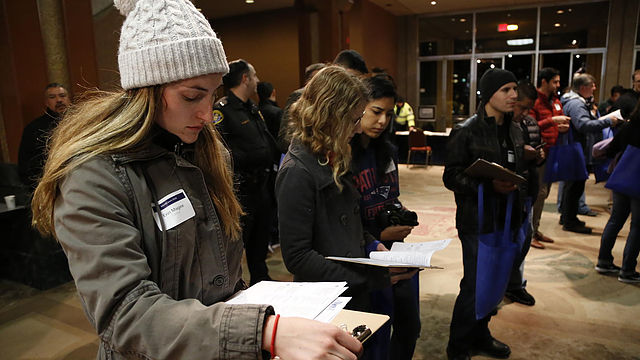
Last week, more than 1,600 volunteers gathered in San Diego County to begin the annual point in time count of people experiencing homelessness. This data will be used by the U.S. Department of Housing and Urban Development to help determine funding for programs aimed at driving homelessness reduction. According to San Diego Tribune reporters, there is some indication that street homelessness in some areas may have declined however, official data is not expected to be released until Spring of this year.

Read the article here.

Hongkong_Header

A Bridge Between Health and Homelessness in Chicago

Adele Peters explores a pilot program in Chicago aimed at providing supportive housing to emergency room “super users”. People experiencing homelessness spend many nights in local emergency rooms (ER) – sometimes in response to illness or medical conditions, and other times to avoid sleeping outside, especially during harsh winters. Glenn Baker used to spend as many as 20 nights a month in Chicago ERs. Now, he has seen an improvement in his health and is visiting the hospital much less since being housed through the University of Illinois Hospital and the nonprofit Center for Housing and Health’s Better Health Through Housing Program. Based on research, the Center predicts that the program will drive health improvements among those experiencing homelessness – addressing hospitals’ growing focus on community – and healthcare cost savings.

Read the article here.

If there is news you would like to include in a future update, contact us here: http://www.ighomelessness-org-416414.hostingersite.com/contact