Crisis UK and Homeless Link Team Up With ‘Older Age Homelessness’ Prevention Session

Crisis UK and Homeless Link Team Up With ‘Older Age Homelessness’ Prevention Session

As part of Crisis‘ 50th anniversary, the organization is conducting a major consultation to gather evidence and opinions of UK residents and homelessness experts that will be used to inform policy change. The ‘Older Age Homelessness’ prevention session, delivered in collaboration with Homeless Link, is a segment of the consultation taking place in London on Monday, October 30, 2017 from 11:00 a.m. to 15:30 p.m.(BST). The session will aim to identify solutions to help prevent elderly people from experiencing homelessness and ensure that those who are rapidly rehoused. Crisis encourages individuals from policy and academic backgrounds in the homelessness sector to register and attend!

Find more information here.

Shelter Project Meets Opposition in Los Angeles

A City Council committee in Los Angeles raised concerns regarding the location of a 49-unit shelter, Lorena Plaza, proposed to be developed in the Boyle Heights neighborhood. The New York Times reports that opponents of the facility argue that an abandoned oil well within close proximity points to environmental hazards and that a nearby restaurant and shopping center may be a disturbance to its residents. The project is being supported by nonprofit organization A Community of Friends – who has built housing for over 2,000 people without accommodation across Los Angeles. “Nothing can happen without political support,” said Ruth Schwartz, the executive director of nonprofit homelessness advocacy group Shelter Partnership.

Read the article here.

Homelessness in Morocco
Crisis_Header

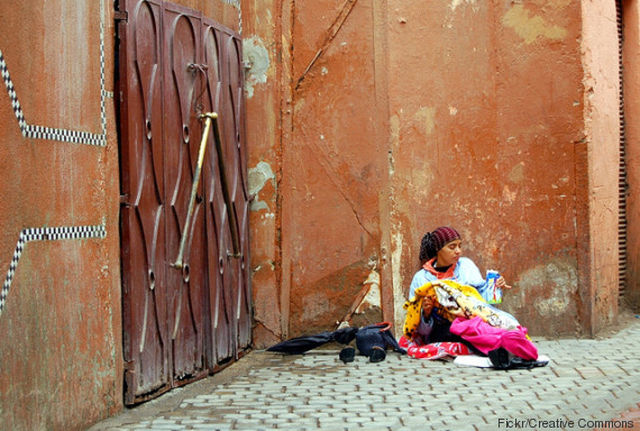
I am text block. Click edit button to change this text. Lorem ipsum dolor sit amet, consectetur adipiscing elit. Ut elit tellus, luctus nec ullamcorper mattis, pulvinar dapibus leo.Morocco’s High Commission for Planning (HCP) released data regarding the state of homelessness in Morocco from the 2014 population census. According to HuffPost Morocco, data indicated that there were about 7,226 people experiencing homelessness in that year. President of the Jood association, Hind Laidi, has raised concern about the need for more current data, suggesting that there is now an estimated tens of thousands of people living without accommodation. The HCP also provided information regarding the demographics of the homelessness population. The report indicated that the majority of this population are men (86.7%), while the remaining 13.3% are women.

Read the article here. (This article’s original text is in French)

Hamilton, Canada Will Offer Tiny Homes to Those Experiencing Homelessness

Hamilton, a city in Ontario, Canada, is moving forward with a plan to develop ‘tiny homes’ for people lacking accommodation. The plan draws inspiration from similar plans implemented in other cities, such as Detroit, Michigan; New York, New York; and Madison, Wisconsin. Matthew Green, Councilor for Ward 3 in the lower city, stated that with people relying on tents placed in old industrial areas of the city for shelter, there is an urgent need for solutions. Advocates for tiny homes argue that these smaller housing units are proven to be more cost effective overall than high-rise facilities.

Read the article here.

Over 20,000 People Receive Units in Jharkhand, India

Earlier this week, Chief Minister of Jharkland, Raghubar Das, announced the distribution of just over 20,000 housing units to people experiencing homelessness across the state through the Pradhan Mantri Awas Yojana (PMAY) initiative. India Today stated that the government will equip the units with electricity, bathrooms, water, and gas cylinders and ovens. Das also mentioned that the state has set a goal to end homelessness in Jharkhand by the year 2020. Kashmir Life reported on the state of homelessness in India in recent years in an article this week.

Read the article here.

If there is news you would like to include in a future update, contact us here: http://www.ighomelessness.org/contact

Freight Containers and Affordable Housing in Hong Kong, Housing Solutions for Young People in Europe, and More

Thinking Inside the Box: Hong Kong’s Next Effort to Solve Affordable Housing Shortage

According to the South China Morning Post, a plan to convert freight containers into living units to increase housing for those experiencing various forms of homelessness is under consideration in Hong Kong, China. Freight container units have been used for housing in places like the Netherlands, Taiwan and Australia; the Chinese government and non-governmental organizations (NGOs) are taking part in a study to examine the strategy’s feasibility in China. Meanwhile, intermediate measures to address the matter will be introduced by the end of the year.

Read the article here.

Madrid Adopts Housing First Approach

“What came first, the egg or the hen?” asked Mayor Manuela Carmena. In a blog post earlier this year, we reported that Madrid’s 2017 budget allotted funding to housing first led initiatives. Those initiatives are continuing to flourish, with an increasing number of homes being allocated to individuals experiencing homelessness across the city. As of December 1, there will be a total of approximately 135 homes available under the program. As reported in 20 Minutos, the single-person homes will be complemented by health, employment, education and social services. This week, experts from Empresa Municipal de la Vivienda y Suelo (EMVS) – the Municipal Company of the Housing and Land of the City council of Madrid, the Municipal Society Zaragoza Housing (SLU), and the Association Provivienda.

Read the article here. (This article’s original text is in Spanish)

Locked Out: Housing Solutions for Vulnerable Young People Transitioning To Independence

FEANTSA and the Fondation Abbé Pierre collaborated on a report providing an overview of affordable housing initiatives in Europe targeted at young people in vulnerable situations. As stated in the report, individuals in Europe under the age of 30 represent about 20-30% of the homelessness population in most European countries. Locked Out discusses the effects of government policies on young people’s ability to transition into living independently. The experience of homelessness among young people is different from that of other age groups; thus, solutions must be tailored to fit their specific needs.The organizations concludes the publication with implications on improving government policies that affect young people’s transition into housing of their own.

Read the report here.

Reworking Approaches to Homelessness in the U.S.

Katie Pyzyk of Smart Cities DIVE delves into the changing approaches to solving homelessness in the United States over past decades. With approximately 550,000 people experiencing homelessness, as reported by the U.S. Department of Housing and Urban Development (HUD), communities have been working to find strategies that will produce long-term solutions for those without housing. Over time, government and community leaders and organizations have begun to shift from traditional, facility-based systems that rely primarily on temporarily sheltering individuals and families to more holistic approaches that also address contributing factors. “You have to address the entirety of a household’s challenges and barriers and always work with their strengths; that’s when you can make a meaningful difference and achieve housing stability,” stated Kurt Larrick, Assistant Director of Communications for the Arlington County Department of Human Services.

Read the article here.

If there is news you would like to include in a future update, contact us here: http://www.ighomelessness.org/contact

IGH Global Framework on Homelessness

Homelessness takes many forms, yet it affects people in every country and community. Despite its global reach, the lack of a universal definition, reliable data, and targeted, preventive strategies operates as a major barrier to ending homelessness. The United Nations’ Sustainable Development Goals (SDGs) do not directly include homelessness, representing a critical gap in the global goals. Therefore, there is a pressing need to strengthen solutions through a clear, inclusive, and standardized definition of the homelessness.

The Institute of Global Homelessness (IGH) developed the Global Framework on Homelessness, a product of a collaboration from researchers, policy experts, and on-the-ground leaders from six continents. This typology includes a common characterization of homelessness, “lacking access to minimally adequate housing,” while also describing the various housing situations that fall within this definition. A country or city can determine which of these categories to include in its local definition of homelessness.

Read the Global Framework on Homelessness in your Language

Articles in Polish and Hungarian also featured the IGH Framework

By allowing us to meaningfully discuss homelessness and laying the foundation for measurement, this Global Framework helps us understand where efforts to address homelessness are succeeding. Defining the problem is a step toward informed, focused, and measurable action to end homelessness.

The three categories of IGH Framework helped inform the United Nations’s description of homelessness (2021) which characterizes this problem as more than the lack of physical housing since it also “compromises” people’s social relationships and includes individuals “living on the streets, in other open spaces or in buildings not intended for human habitation, people living in temporary accommodation or shelters for people experiencing homelessness, and, in accordance with national legislation, may include, among others, people living in severely inadequate accommodation without security of tenure and access to basic services.”

How did IGH develop the Framework?

To ensure the Framework resonated globally, IGH enlisted three international homelessness experts to guide the process. Professors Volker Busch-Geertsema, Dennis Culhane, and Suzanne Fitzpatrick agreed to draft the Framework and gather feedback.

Luckily, they had a head start. Excellent research has been done on this question, both on a regional level and a global scale. For example, FEANTSA in Europe and the European Observatory on Homelessness (EOH) developed the European Typology of Homelessness and Housing Exclusion (ETHOS) to capture the various shapes of homelessness in Europe.

Globally, researchers Graham Tipple and Suzanne Speak have written extensively on homelessness in the developing world, including the book The Hidden Millions: Homelessness in Developing Countries. At the country level, Professors Busch-Geertsema, Culhane, and Fitzpatrick compiled articles and policy papers from across the world.

In June 2015, 100 thought leaders gathered in Chicago to discuss homelessness in their home countries and give input toward the draft version of the Framework. Presentations explored Thailand, the Philippines, Russia, Canada, Argentina, Brazil, Australia, Japan, Malaysia, China, Korea, India, and the European Union. Additional feedback came from attendees from Belgium, Chile, Denmark, England, Finland, France, Greece, Hungary, Ireland, Kenya, Mexico, Netherlands, Poland, Puerto Rico, Scotland, South Africa, Spain, the USA, and Wales. We are immensely grateful to the leaders who shared their time and expertise.

How does the Framework help end homelessness?

Having a shared vocabulary enables meaningful collaboration across countries, preventing misunderstandings and miscommunication. Before the Framework was established, the lack of a common definition often resulted in time spent debating the meaning of homelessness rather than focusing on solutions.

“The reason why we are focused on a common understanding of homelessness is because it is central to having any kind of meaningful dialogue about homelessness—not just amongst researchers but also between policy-makers, practitioners, and others interested in homelessness,” said Fitzpatrick.

Additionally, the Framework provides a foundation for measuring and assessing the various dimensions of homelessness globally. While some countries do collect data, their methodologies and definitions often differ in scope and criteria, making comparisons difficult. The IGH Framework enables countries to track and meaningfully compare certain types of homelessness, even if their broader definitions vary. In many places, however, homelessness remains unmeasured, leaving the issue largely invisible to policymakers.

“A global estimate of homelessness… is important for a worldwide initiative to address the problem, and to have numbers. Numbers drive investment,” said Busch-Geertsema.

Finally, and most importantly, having a common vocabulary and ability to assess the dimensions of homelessness will set the foundation for new action to reduce those numbers globally.

Advancing an International Definition of Homelessness

IGH will continue collaborating with cities and countries to advance the use of a clear and comprehensive definition as a tool for guiding and evaluating efforts to address homelessness. The IGH Framework, in complement to practical resources, can help communities better understand the scope and nature of homelessness in their context. These categories serve as a foundation for developing concrete goals to reduce homelessness, sharing effective practice, creating space for mutual learning across countries, and mobilizing global, targeted action. 

At the global level, IGH will advance its work with the United Nations to include homelessness in the Sustainable Development Goals (SDGs) and establish a shared definition of homelessness that reflects its diverse realities and helps unify responses across regions and sectors.