The Ruff Institute of Global Homelessness Announces New Executive Director

After an extensive global search process led by members of the IGH Advisory Committee, we are pleased to announce that Peter Mackie has been selected as IGH’s next Executive Director, beginning November 18, 2025.

From the IGH Advisory Committee

“We are thrilled to welcome Peter Mackie as the next Executive Director of the Ruff Institute of Global Homelessness. Peter brings a deep expertise in prevention, systems change and housing, and a genuine commitment to working alongside communities and governments to end homelessness. His global leadership, research expertise, and collaborative spirit will strengthen IGH’s mission and help carry forward the incredible progress made under Lydia Stazen’s leadership.” 

– Louise Casey, Baroness Casey of Blackstock, Chair of Ruff Institute of Global Homelessness

“Peter Mackie is an outstanding leader in the field of homelessness and housing policy,” His work has already shaped how nations think about prevention, and his leadership will help IGH continue bridging research, practice, and compassion on a global scale. He is exceptionally well positioned to lead IGH’s work and strengthen its impact worldwide.

– Father Dennis H. Holtschneider, CM | IGH Board Member and DePaul University Chancellor

Peter Mackie is an internationally recognized expert in homelessness and housing policy. His research and policy work have informed national legislation and prevention strategies in multiple countries. Most recently, he served as Professor of Human Geography at Cardiff University. Peter has held advisory roles with FEANTSA, The Royal Foundation, and the Centre for Homelessness Impact, and regularly supports charities, umbrella bodies, and national governments. He has also collaborated with the European Commission and UN-Habitat.

.

Joining the Ruff Institute of Global Homelessness as Executive Director is both an honour and a privilege. Across the world, communities and partners are working tirelessly to end homelessness—addressing one of the most urgent and shared challenges of our time. Their efforts reflect the power of collective action and a shared refusal to give up. I am committed to building on this work, strengthening collaboration with colleagues old and new, and advancing our collective focus on preventing homelessness before it begins. 

– Peter Mackie

.

Biography of Peter Mackie

With over 18 years of post-PhD experience spanning academia and the voluntary sector, Peter has built a distinguished career dedicated to driving social impact. He began his professional journey with two formative years in the third sector, working for a homelessness charity, before moving into academia. Over the past 16 years, he has become a leading international authority on efforts to prevent and end homelessness. Alongside his academic work, he has served for 15 years as a Trustee — and most recently as Chair of Llamau, Wales’s leading homelessness charity for young people and women.

Peter’s research and advocacy focus on two main areas. First, he is recognized globally as an expert in homelessness, particularly in prevention. His research has informed new legislation, policy, and practice across multiple countries. Second, he maintains a long-standing interest in urban livelihoods across the world, exploring topics such as child labour, livelihoods in conflict and crisis contexts, and the working lives of refugees. He has worked and published research across a wide range of cultural and geographic contexts, including Africa (Ethiopia, Kenya, Nigeria, Somaliland, Tanzania), Asia (India, Nepal, Pakistan), the Middle East (Egypt, Jordan), Latin America (Colombia, Ecuador, Peru), North America (USA, Canada), the UK, much of Europe, and Australia. Peter currently holds advisory roles with FEANTSA, The Royal Foundation, and the Centre for Homelessness Impact, and regularly advises charities, umbrella bodies, and national governments. He has also collaborated with the European Commission and UN-Habitat on several major initiatives.

International Open Access Week: Equitable Knowledge Exchange

Resource Guide

When information is open access, it is freely available for everyone to use—at no cost—in physical and/or digital formats. Open access materials typically carry fewer copyright and licensing restrictions than traditionally published works.  Open Access aims to ensure that marginalized communities are included in critical scholarly conversations and that researchers and practitioners across regions can access and use knowledge to further their work. Ensuring open and equitable access to research and evidence is essential for driving data-informed policies that address homelessness and its related social challenges.

October 20-26 is International Open Access Week — an annual observance that challenges us to think critically about three important components of equitable knowledge exchange.

Who has access to education and research?

How and where is knowledge created and shared?

Whose voices are recognized and valued?

This year’s Open Access Week theme asks: how, in a time of uncertainty, can communities reassert control over the knowledge that is produced?

Accessible and inclusive knowledge exchange is a pillar of our work at the Institute of Global Homelessness. We strive to continuously improve our efforts to create opportunities for our colleagues and friends to exchange ideas and research that will help us all address homelessness more effectively through initiatives such as the IGH Community of Impact — a global knowledge exchange webinar series, and our partnership with the International Journal on Homelessness — the first, international, peer-reviewed, open-access journal focused on promoting and advancing scholarly communications and academic discourse among all sectors regarding preventing and ending homelessness.

Organizations

SPARC is a nonprofit advocacy organization that supports open systems for open access, education, and data that enable everyone, everywhere to access, contribute to, and benefit from the knowledge that shapes our world. Its pragmatic agenda focuses on driving policy change, supporting member action, and cultivating communities that advance our vision of knowledge as a public good. https://sparcopen.org/open-access/

The Knowledge Equity Lab, housed at the University of Toronto Scarborough’s Centre for Global Development Studies, is a trans-disciplinary space that seeks to challenge multiple forms of exclusion within the structure of knowledge production and exchange. Their Unsettling Knowledge Inequities Podcast dives deep into various topics related to making policies and systems for knowledge sharing more equitable. Access it here: https://knowledgeequitylab.ca/podcast/

Open Access Knowledge on Homelessness and Housing

Disseminating Research: Getting Critical Findings Into the Right Hands https://www.comnetwork.org/blog/disseminating-research-getting-critical-findings-into-the-right-hands

Resources for delivering research in a simpler, short format with inclusive language and practical implications such as infographics, briefings or summaries to make it easier for practitioners to put research into practice https://www.cdc.gov/health-literacy/php/develop-materials/plain-language.html?CDC_AAref_Val=https://www.cdc.gov/healthliteracy/developmaterials/plainlanguage.html

Why Am I Always Being Researched’ is Chicago Beyond’s equity-based guidebook to help shift the way community organizations, researchers, and funders ask for, produce, and use knowledge. It aims to improve research practices by encouraging said groups to ask hard questions, wrestle with bias, and push against “how it has always been done” https://chicagobeyond.org/insights/philanthropy/why-am-i-always-being-researched/

Reasserting Community Control Over Who Owns Our Knowledge https://sparcopen.org/news/2025/reasserting-community-control-over-who-owns-our-knowledge/

Behind the Scenes: Designing Lived-Experience Input Sessions for the Framework for an Equitable COVID-19 Homelessness Response describes the process used to gain insights from people with lived-experience of homelessness and housing instability through and create population-specific briefs to offer inform the homelessness response sector’s response. https://static1.squarespace.com/static/5e18db88dc57ef26767dda23/t/612929b4f502fb589de502af/1630087605080/08-27-2021_Behind+the+Scenes.pdf

Advancing Global Commitments on Homelessness

Published in September 2025, the second UN Secretary-General Report on Homelessness identifies the absence of a global definition and reliable data as major barriers to ending homelessness. Contrary to narratives that frame homelessness as the result of individual choices, homelessness is driven by structural inequalities, social exclusion, stigmas, and systematic barriers. To prevent and end homelessness, there are diverse roles and responsibilities at local, regional, national, and international levels, and governments at every level play an important role in addressing this crisis including implementing evidenced-based systems. In this context, the UN report plays a key role by drawing on 38 written contributions received from national and local governments, civil society, and other stakeholders, and offering recommendations for inclusive policies and programs to address homelessness.

Lacking a safe, stable, and affordable house is, as recognized by the document, as a violation of the human right to adequate housing. Despite increasing attention on this issue, homelessness continues to be a complex, intersectional problem framed by misconceptions and prejudices. In the absence of an internationally agreed definition, the UN report references IGH’s Global Framework on Homelessness as a tool aimed at defining and capturing the full extent and varied forms of homelessness.

Although homelessness is not explicitly included in the Sustainable Development Goals (SDGs), the UN report acknowledges that its global rise poses a significant threat to the 2030 Agenda, hindering progress on multiple objectives, such as poverty eradication, health, education, gender equality, and sustainable cities. Ending homelessness is therefore not just a social priority; it is central to countries’ broader development objectives. In line with this, IGH has advocated for the inclusion of homelessness in the SDGs, in order to strengthen data collection, standardize methodologies, and improve policies.

What Does the UN Report Recommend?

Among the key elements identified by the UN Secretary-General’s report are gaps in definitions, data, legislation, and housing solutions across countries. Accordingly, the document recommends prioritizing the development of a shared and inclusive definition of homelessness. In parallel, member states should work to end criminalization and address the systemic drivers of homelessness. Evidence shows that aggressive law-enforcement approaches can further reinforce marginalization and re-traumatize people experiencing homelessness. The United States and Canada have recently implemented ban encampments and eviction strategies that have promoted harmful narratives and stereotypes but have not offered people the necessary assistance to exit homelessness. Evidence shows that criminalization violates human rights and makes access to life-saving services more difficult, deepening the challenges of homelessness rather than addressing its root causes.

At the structural level, urban development, insecure tenure, rising costs, and discriminatory policies have led people to homelessness. In response, the UN Secretary-General recommends its Member States to respect international human rights and housing standards, ensure public investment, governance, and institutional capacity to prevent and address homelessness, as well as recognize intersectionality and design policies that address the specific needs of women, LGBTIQ+ communities, indigenous people, older adults, people with disabilities, youth, and other disproportionately affected groups.

Global Issue, Local Actions

When addressing homelessness, the importance of local and regional efforts cannot be overstated. Reflecting this, the UN Secretary-General’s report highlights the creation of the International Mayors Council on Homelessness in 2023. In 2024, the Council, led by IGH and UN-Habitat, adopted a joint declaration outlining key priorities: prevention, housing-led strategies, multilevel collaboration, tackling stigma, and integrating the voices of lived experience. Additionally, two IGH Vanguard Cities are also featured: Chile’s 2024 national census of homelessness and Glasgow’s eviction-prevention hub, showing how cities are developing solutions to homelessness.

Earlier this month, during the Civil Society Forum at the Regional Sustainable Development event led by CEPAL, civil society organizations and social movements from across Latin America and the Caribbean presented a powerful declaration calling for:

  • A new Sustainable Development Goal on homelessness.
  • Recognition of people in street situations as a priority in social policies.
  • Creation of a permanent regional commission on homelessness.

The declaration was read to government leaders and CEPAL authorities by Laura Giannecchini (CLADE), Flávio Lino (Movimento Nacional da População em Situação de Rua), Milton Rezende (CUT), and Renata Juliotti (Geledés – Instituto da Mulher Negra).

These priorities are also reflected in the UN’s recommendations for developing inclusive policies and strategies to address homelessness worldwide. Without international commitments and coordinated strategies, progress remains limited.

Opportunities for Progress

Similar to CEPAL discussions about homelessness, global leaders and government representatives will have an important platform for action during the Second World Summit for Social Development 2025. The event will take place in Doha, Qatar, on November 4-6, 2025. Over these three days, UN State members will meet and are expected to adopt the Political Declaration, offering an avenue to commit to ending homelessness.

The Draft of the Political Declaration, published in July 2025, calls for “taking urgent national and international action to address homelessness as an obstacle to the enjoyment of human rights and the attainment of social development.” Framed as an issue in the context of social development, the lack of affordable housing is intertwined with homelessness. The document, in particular, recognizes the “universal right to an adequate standard of living,” committing to ensure housing policies for vulnerable populations, including those experiencing homelessness.

The upcoming summit represents a crucial moment to ensure that homelessness is no longer overlooked in global agendas. By adopting the Political Declaration, Member States can strengthen an international commitment to tackling homelessness as a core social development challenge, guaranteeing that every person has a place to call home.

2025 Vincentian Family Homelessness Campaign

Homelessness is an urgent, solvable issue, affecting every country in varying contexts. To effectively end homelessness, countries must accurately measure the scope of homelessness through clear, standardized, and inclusive definitions and standardized, disaggregated data collection.

The Vincentian Family Homelessness Campaign — a collaborative advocacy campaign co-sponsored by Vincentian Family at the United Nations, in partnership with Famvin Homeless Alliance, the Institute of Global Homelessness and Depaul International — calls for countries to prioritize defining and accurately measuring homelessness.

The Secretary General calls for governments “to institutionalize regular data collection on homelessness using harmonized indicators that reflect the lived experiences and intersecting exclusions of affected populations.”

Although homelessness meaningfully intersects with the current Sustainable Development Goal (SDGs), it is absent from all 17 SDGs, their 169 targets and their 248 indicators. Around the world, we are facing a housing crisis, and rates of homelessness are rising. Without homelessness definition and measurement, millions of people experiencing homelessness will continue to be left behind in global development efforts. Homelessness definition and measurement can be established through coordinated action across sectors.

Countries have already shown that homelessness can be prevented and ended. With inclusive policies, programs and collaboration, homelessness is solvable. By strengthening efforts to collect and report data on homelessness, nations can pave the way for its inclusion within the post-2030 UN agenda. This is a vital step to galvanize political will, allocate dedicated resources, and create a shared global metric for progress towards ending homelessness.

We call on you to join our efforts to encourage countries to strengthen their efforts to collect accurate data on homelessness and commit to ending homelessness. By doing so, they can help pave the way for homelessness to be included in the post-2030 UN agenda.

How Can You Help?

Share suggested social media posts on milestone dates. We have curated several graphics that spotlight the issue of homelessness, causes and intersections, housing as a solution to homelessness, and more. Download the toolkit in your language below.

Read and share the 2025 UN Secretary-General’s Report: “Inclusive policies and programmes to address homelessness”. The report urges governments to adopt coordinated national strategies, strengthen data systems, and acknowledge the unique challenges of groups facing systemic exclusion.

Write a letter to your country’s representatives, encouraging them to strengthen their efforts to collect homelessness data. By doing so, they can help pave the way for homelessness to be included in the post-2030 UN agenda.

Access a template letter to contact your nation to advocate for action on homelessness:

Access the campaign social media toolkit in your language here:

El derecho a la vivienda en América Latina: Entre el papel y la práctica

Una mirada regional

Por Yamitza A. Yuivar Villarreal

En América Latina, las promesas constitucionales sobre el derecho a la vivienda a menudo no se traducen en protecciones reales para quienes viven en situación de calle. Si bien muchos gobiernos han reconocido el derecho a la vivienda, la implementación de soluciones concretas e integrales sigue siendo difícil de alcanzar. Como resultado, los países carecen de viviendas asequibles, no asignan financiamiento a estrategias de vivienda inclusivas y marginalizan a las poblaciones sin hogar. Sin embargo, las autoridades podrían acabar con el sinhogarismo y abordar un rango amplio de inseguridades habitacionales a través de marcos legislativos de apoyo y acciones prácticas.

El derecho constitucional a la vivienda

Un análisis exploratorio de 20 países latinoamericanos revela que 16 constituciones nacionales reconocen el derecho a la vivienda. Según el Consejo de Derechos Humanos de las Naciones Unidas (2016), este derecho está intrínsecamente vinculado a la “dignidad inherente a la persona humana”. En 10 naciones, se establece que los ciudadanos tienen derecho a acceder a una “vivienda digna o decorosa”, entre ellos Argentina, Colombia, República Dominicana, Ecuador, Haití, Honduras, México, Nicaragua, Paraguay y Uruguay. En otras cuatro (Bolivia, Cuba, Ecuador y Venezuela), las constituciones hacen referencia al derecho a una “vivienda adecuada”. Ecuador es el único país cuya constitución reconoce el derecho a una vivienda digna y adecuada.

Algunas constituciones van más allá al reconocer la vivienda como un derecho social. En Argentina, la Constitución de 1995 indica que el Estado debe permitir prestaciones de seguridad social, incluyendo una vivienda digna (artículo 14 bis). Por su parte, Brasil estableció en la Constitución de 1988 que la vivienda es uno de varios derechos sociales, los que también incluyen seguridad, salud, alimentación, trabajo y asistencia a las personas vulnerables (artículo 6). De igual manera, la ley constitucional de Panamá (2004) estima la necesidad de políticas de vivienda para garantizar el derecho social de la población a acceder a la vivienda. En República Dominicana y El Salvador, las constituciones se refieren a la vivienda como parte del “interés social” más amplio.

Sin embargo, estas disposiciones legislativas suelen ser insuficientes en la práctica. El derecho a la vivienda se ha implementado mediante programas marcados por la lógica del mercado y una inversión pública limitada en vivienda asequible para las poblaciones vulnerables, incluyendo a las personas que experimentan el sinhogarismo.

La brecha de implementación

En paralelo a las protecciones constitucionales, 8 países latinoamericanos han creado legislaciones y políticas nacionales específicamente en sinhogarismo. Brasil, Chile, Colombia y Argentina han promulgado leyes que definen la situación de las personas en situación de calle y establecen estrategias nacionales. Otras naciones se centran en grupos vulnerables específicos, como Perú, Paraguay y Bolivia, que cuentan con programas y/o leyes nacionales dirigidos a niños, niñas y adolescentes. En todos estos países, las políticas se dirigen principalmente a las personas que viven en situación de calle o en alojamientos temporales, excluyendo otras formas del sinhogarismo como las recomendadas por el Marco del IGH. Es igualmente importante considerar que falta evidencia práctica de la efectividad y rendimiento de la mayoría de las políticas.

Otros 8 países carecen de legislación específica sobre la falta de vivienda, pero cuentan con leyes relacionadas que pueden influir en las respuestas al problema, abarcando la vivienda, la asistencia social y la reducción de la pobreza. Países como Costa Rica y Honduras crearon instituciones nacionales para los subsidios de vivienda, aunque Honduras posteriormente derogó su fondo de vivienda. Cuba, Guatemala y Nicaragua priorizan la vivienda universal, mientras que Guatemala dispuso el apoyo estatal para familias de bajos ingresos. Cuatro naciones cuentan con políticas de asistencia social que benefician a las poblaciones sin hogar, como la priorización de los servicios de salud en Nicaragua y la provisión de albergues transitorios en Cuba. Algunas leyes se dirigen a grupos específicos: República Dominicana se centra en los niños sin familia y El Salvador en los adultos mayores. Las leyes de reducción de la pobreza en Costa Rica y El Salvador asignan la responsabilidad estatal de apoyar a las personas en extrema pobreza y con discapacidad.

A pesar de lo que está escrito en el papel, en la realidad, las respuestas gubernamentales a la situación de calle se centran principalmente en la provisión de albergues, junto con apoyo fisiológico y social básico y, en menor medida, orientación profesional. Y aunque las Naciones Unidas indican que los alojamientos temporales pueden formar parte de una respuesta inmediata, también afirman que transformar esta provisión en una solución a largo plazo “incumple con las obligaciones en materia de derechos humanos”. Aún así, medidas preventivas para el sinhogarismo, como las políticas de mitigación de la pobreza, solo se incluyen explícitamente en las estrategias nacionales de dos países: Chile y República Dominicana.  Cuando los gobiernos descuidan la preservación del derecho a la vivienda y no invierten en alojamientos adecuados y asequibles, socavan los esfuerzos para abordar eficazmente la falta de vivienda.

Las personas en situación de calle también son objeto de leyes de criminalización en Venezuela, Panamá y Uruguay, que penalizan sus comportamientos en público, incluido el acampar, con sanciones económicas o penas de cárcel. Alentamos a los países a eliminar las leyes que penalizan la falta de vivienda o las conductas vinculadas a la vida en la calle. Dicha legislación no solo obstaculiza los esfuerzos para erradicar el sinhogarismo, sino que también refuerza estereotipos nocivos en las sociedades.

Las piezas faltantes en la respuesta al sinhogarismo

La crisis habitacional y el sinhogarismo están estrechamente entrelazados. Como advierte ONU-Hábitat, “no reconocer, proteger ni garantizar el derecho a una vivienda adecuada conlleva la violación de numerosos derechos fundamentales, como el derecho al trabajo, la educación, la salud y la seguridad”. De manera similar, el Banco Mundial enfatiza que invertir en vivienda no solo satisface necesidades humanas básicas, sino que también genera beneficios sociales más amplios al mejorar los indicadores en materia de salud, educación e inclusión social. En este contexto, la financiación de la vivienda desempeña un papel fundamental en el avance de la agenda global de desarrollo.

En América Latina, la falta de financiamiento adecuado y de voluntad política para implementar la legislación vigente obstruyen el financiamiento de viviendas asequibles. Y en este análisis no podemos obviar al Estado. De los países que contemplan el derecho a la vivienda en sus constituciones vigentes, 11 naciones latinoamericanas otorgan un papel significativo al Estado en la promoción y garantía de este derecho, entre ellas Argentina, Bolivia, Colombia, Cuba, República Dominicana, El Salvador, Honduras, Nicaragua, Panamá, Paraguay y Venezuela. En cuatro constituciones, se establece el mandato compartido de que “el Estado establecerá las condiciones para hacer efectivo este derecho”. Si bien las  legislaciones reconocen los derechos humanos de las personas que viven en la calle, los gobiernos a menudo no asignan los recursos necesarios, adoptan estrategias enfocadas en la vivienda (housing-led), ni crean una coalición colaborativa e interseccional para mejorar los servicios.

Disponer de un marco legislativo que garantice viviendas adecuadas y asequibles y, lo que es más importante, que tenga un carácter de apoyo para abordar el sinhogarismo, puede ayudar a construir una respuesta sostenible y bien financiada a un problema global. Para afrontar estas situaciones, el Estado debe desempeñar un papel central, ya que es su responsabilidad “adoptar ciertas medidas para hacer inmediatamente efectivo el derecho a una vivienda adecuada y, a este respecto, debe darse prioridad a los grupos sociales que viven en condiciones desfavorables”, incluidas las personas experimentando el sinhogarismo (Observación General n.º 4, 1991). No obstante, sin una estrategia más amplia e inclusiva, mayores inversiones en soluciones de vivienda permanente y un cambio de voluntad política, América Latina corre el riesgo de perpetuar ciclos de exclusión y vulnerabilidad.

Read the English version of this blog below.

Continue reading “El derecho a la vivienda en América Latina: Entre el papel y la práctica”

La Importancia de Estadísticas Globales del Sinhogarismo

El sinhogarismo es un fenómeno global que tiene incidencia en todo el mundo, aunque se manifiesta de diversas maneras según las circunstancias locales de cada país. Debido a la importancia de promover estadísticas precisas, el equipo del Instituto Global del Sinhogarismo (IGH) desarrolló el Global Homeless Data Map o Mapa de Datos Globales del Sinhogarismo. Las estadísticas compartidas se basan en una revisión global de todos los datos disponibles públicamente, pero reconocemos que son inexactas debido a lagunas en la recopilación de información, diferentes definiciones nacionales y problemas de precisión en muchos países. Por ello, el mapa del IGH tiene por objetivo compartir el estado actual de los datos del sinhogarismo y abogar para que los países establezcan definiciones estandarizadas y mejoren la recolección de datos para responder a la creciente crisis de las personas sin hogar.

Esta iniciativa consiste en una inspección de todos los datos disponibles públicamente en fuentes gubernamentales, organizaciones no gubernamentales, organizaciones intergubernamentales y artículos periodísticos en medios de comunicación. Los datos han sido compartidos a través de un mapa que incluye el número de personas experimentando el sinhogarismo en cada país, la definición de sinhogarismo utilizada, la metodología de recolección, el año de la estadística y la fuente de la información. El mapa fue actualizado por el equipo del IGH a inicios de 2024 para tener una visión actualizada de la situación global del sinhogarismo y promover acciones concretas y efectivas que contribuyan a eliminar este problema. El mapeo incluye información de todos los países con alguna fuente de datos en sinhogarismo, sin embargo, sólo 78 naciones han llevado a cabo procesos estadísticos oficiales.

Desde el inicio de este proyecto, el número de países que reporta estadísticas oficiales sobre el sinhogarismo ha aumentado. Al mismo tiempo, ha crecido la atención mundial sobre este problema con tres resoluciones de las Naciones Unidas sobre el sinhogarismo, el Informe del Secretario General de las Naciones Unidas sobre las personas en situación de calle y la Plataforma Europea de Lucha contra las Personas sin Hogar. La resolución de las Naciones Unidas adoptada por la Asamblea General en 2021, “exhorta a los Estados Miembros a que recopilen datos desglosados sobre la demografía relacionada con las personas sin hogar y establezcan categorías de personas en situación de sinhogarismo que acompañen a las herramientas de medición existentes y alienta a los Estados Miembros a que armonicen la medición y la recopilación de datos sobre las personas sin hogar para permitir la formulación de políticas nacionales y mundiales.” Aunque se ha incrementado la atención internacional sobre esta cuestión, las personas en situación de calle siguen estando ausentes de los 17 Objetivos de Desarrollo Sostenible (ODS) y de los 169 Indicadores de Naciones Unidas. El IGH está impulsando la inclusión del sinhogarismo en los ODS debido a la gravedad de este problema en todos los países del mundo. Las personas experimentando el sinhogarismo están aumentando a nivel mundial por la creciente urbanización, la crisis del coste de la vida, el desplazamiento y la migración, el cambio climático y los conflictos armados, y la falta de datos y de medidas específicas sobre las personas sin hogar amenaza el progreso mundial en la consecución de los ODS.

Los datos presentados por el mapa del IGH son las mejores estadísticas globales sobre el sinhogarismo disponibles en la actualidad, sin embargo, necesitamos que un mayor número de países recopilen información para que los datos sean más precisos. En un esfuerzo por dirigir la atención a la magnitud del problema del sinhogarismo, nuestro mapa comparte todas las estadísticas disponibles públicamente sobre personas sin hogar y destaca las diferencias en la calidad, transparencia, precisión y fiabilidad de los datos. Durante el proceso de revisión, identificamos que gran parte de los datos mundiales están desactualizados y no se recopilan siguiendo los estándares internacionales, por lo que en el mapa no comparamos entre países ni por incidencia (número de personas sin hogar por cada 10.000 habitantes). De igual forma, observamos que las definiciones varían ampliamente de un país a otro, lo que hace extremadamente difícil contabilizar el total de personas en situación de sinhogarismo. En algunos casos, el sinhogarismo refiere a personas que viven en la calle o carecen de un techo, otros países incluyen a quienes se albergan en alojamientos temporales y algunos utilizan una definición más amplia que abarca tanto las categorías anteriores, así como a las personas que comparten un mismo lugar de residencia, viven en alojamientos inseguros, en condiciones de hacinamiento o en estructuras no destinadas a vivienda humana. Esta última conceptualización es más integral de las distintas manifestaciones del sinhogarismo y se alinea con el marco de categorías y manifestaciones propuesto por el IGH en 2016, el que fue desarrollado en colaboración con investigadores, expertos en políticas y líderes de los seis continentes para ofrecer un lenguaje compartido que facilite la colaboración internacional, el entendimiento intercultural y la medición del sinhogarismo a nivel global.

Creemos que, en la lucha por erradicar el sinhogarismo de manera eficaz, es necesario que países y gobiernos trabajen en definiciones claras, estandarizadas e inclusivas que permitan recolectar información estadística certera y fiable. El IGH propuso un marco que combina la noción tradicional del sinhogarismo, la falta de vivienda adecuada, con otras formas de necesidades de vivienda y permite a los países y ciudades elegir según sus contextos locales. Pese a reconocer las diversas formas en que puede manifestarse el sinhogarismo, creemos que, sin definiciones estandarizadas y metodologías consistentes, las estadísticas actuales están incompletas y quienes diseñan políticas públicas carecen de la información adecuada para entender y atender la magnitud del problema. Por ejemplo, en un análisis que el IGH está realizando de la situación en América Latina y el Caribe fue posible observar que existe un foco predominante en la situación de calle, lo que limita las estrategias diseñadas para erradicar el sinhogarismo en su totalidad. Asimismo, las estadísticas, en muchos países inexistentes, tienden a ser recopiladas siguiendo esta definición y se enumera casi exclusivamente a quienes viven en las calles o albergues temporales a través de métodos como conteos nocturnos, los que han sido cuestionados por su baja fiabilidad. En ese contexto, el objetivo de la visualización de datos en este mapa es demostrar los problemas de los datos; además de dónde y cómo los países pueden alinearse en cuanto a la definición y las metodologías, mejorando con el tiempo.

Reconocemos la necesidad de priorizar la recolección de buenos datos por sobre la búsqueda de estadísticas perfectas. Con buenos datos, nos referimos a información relevante, actualizada y de amplio alcance recopilada a través de metodologías válidas y alineadas bajo una definición integral y detallada de la falta de vivienda. Los datos sobre el sinhogarismo deben ser accesibles, actualizarse constantemente para reflejar la situación actual de cada país/región y estar estandarizados en todo el conjunto de datos para garantizar la coherencia y fiabilidad de la información obtenida. Las estadísticas de este mapa no siguen los estándares de calidad o precisión esperados, pero hacemos un llamado a mejorar los procesos estadísticos para rastrear la extensión de este problema, tomar decisiones informadas y desarrollar estrategias que aborden los elementos multidimensionales e interseccionales que causan la falta de vivienda.


Homelessness, Equity and Inclusion

Although structural and systemic racism may look different throughout the world, we see an undeniable global throughline between racism and homelessness, with homelessness disproportionately affecting groups who have been historically marginalized. The Institute of Global Homelessness (IGH), Funders Together to End Homelessness, the National Coalition for the Homeless (NCH), and the Canadian Lived Experience Leadership Network (CLELN) have a shared commitment to actively working to counter inequities, including racism, in the work to prevent and end homelessness. 

For our first Community of Impact webinar this year, we were joined by Donald Whitehead — Executive Director at National Coalition for the Homeless — a national network of people with lived experienced homelessness; activists; advocates; community-based and faith-based service providers; and others committed to preventing and ending homelessness while ensuring the immediate needs of those experiencing homelessness are met and their civil rights are respected and protected. The discussion was moderated by Stephanie Chan — Chief Strategy Officer at Funders Together to End Homelessness. Funders Together to End Homelessness provides critical resources and learning and networking opportunities to our members to increase their knowledge, capacity, and effectiveness in both the individual and collective work around housing justice as a way to end homelessness and housing instability.

Donald shared details about NCH’s Lived Experience Training Academy (LETA) — a development course designed to equip people with lived experience of homelessness to occupy leadership roles in advocacy work. LETA is led and designed by  Donald and his colleagues Dr. Rajni Shankar-Brown, David Peery, Jeff Olivet, and Michelle Bush and informed by focus groups conducted with people with lived experience. LETA’s core curriculum includes the history of homelessness, financial literacy, organizing and advocacy incorporates themes such as accounting for trauma, self-care, and transformative leadership practices.

During a robust question and answer (Q&A) session, participants inquired about practical approaches to equitable partnership with people with lived experience, how to respond to resistance to DEI efforts, avoiding tokenism and ensuring that people with lived experience have decision-making power.

Donald highlighted that at NCH, centering lived expertise has become common practice and is embedded throughout NCH’s policies and practices. He said, “when we start a project, the first thing that we do is figure out how it affects people experiencing homelessness”. He shared insights about how homelessness, housing and public health agencies such as the United States Department of Housing and Urban Development (HUD), the United States Department of Health and Human Services (HHS) and the Center for Disease Control (CDC) have taken a collective impact approach by coordinating their effort to learn what works and what doesn’t work. He also highlighted that agencies like NCH have proven that the centering of lived expertise and racial equity can both be prioritized in social change work. Donald suggested that practitioners in social change work be informed about traumas associated with lived experience and be intentional about preventing further harm when people with lived experience are contributing to the work. LETA’s inclusion of trauma-informed care as part of the curriculum helps to prevent re-traumatization of people with lived experience entering advocacy work. Learn more about racial equity here.

Stephanie suggested that tokenism can be avoided when practitioners, stakeholders, researchers and advocates work alongside people with lived experience — ensuring that they have roles at all levels of the work to prevent and end homelessness, and other intersecting issues. Learn more about rights-based participation here and about equity-based decision-making here. In closing, she left everyone with this question for reflection:

 “If you do not have lived experience and have occupied or currently occupy a position of leadership and/or decision-making, what kinds of learning or training opportunities can you use to become more equipped to relinquish power so that people with lived experience can occupy space and be a part of decision-making.” (paraphr.)

We recognize that learning how to carry out the work to prevent and end homelessness equitably is never done. We are committed to continuous knowledge exchange with our global community about the intersection between homelessness and diversity, equity, and inclusion and transparency about our progress and implementation.

Links to Resources

Vanguard Trip: Santiago de Chile, Montevideo, Uruguay, and São Paulo, Brazil

We’re so grateful for the chance to travel again and be with our colleagues in person. We were able to spend time in South America during the months of July and August, learning from and working with our Vanguard Program partners. Our key takeaways were: the core issues of homelessness are very similar all around the world, with rising challenges in accessing housing, serving people with complex needs, complications in cross-sector partnerships, and thinking through creating people-centered systems that quickly resolve homelessness with permanent solutions. But another takeaway is that all our partners are passionate, innovative, dedicated, and willing to learn from mistakes and from each other, which gives us continued optimism that we can all rise together to meet the urgent challenge of homelessness.  

Meeting with the National Street Team for the Chilean Ministry of Social Development and Families

In Santiago de Chile, we met with our partners at the National Street Team in the Ministry of Social Development and Families (MDSF). Our first site visit was with Nuestra Casa, which has collective housing as well as a Housing First program. We met with a Housing First resident, Santiago, an artist, who talked about his experience in Nuestra Casa’s HF program as well as showing us his work, carved lanterns.  Next, we had a meeting with the service delivery team of the Barrio Calle program, an intersectoral project to reduce homelessness in two neighborhoods in Santiago through street outreach and integrated services. We heard about their challenges in accessing housing units and serving people with complex needs. IGH also presented at two forums, an NGO forum and a collective of real estate developers and business people, sharing some global examples that they can adapt to drive housing solutions in Chile. And we worked with our partners at CISCAL to continue planning the next International Journal on Homelessness conference which will be held near Santiago in January 2025 (exact dates to come soon!).

Our first meeting in Uruguay was with MIDES Minister Lema, Fernanda Auersperg, Gabriel Cunha and Antonio Manzi

The next stop on our trip was Montevideo, Uruguay. We worked closely with the Ministry of Social Development (MIDES) and visited many housing programs for families and individuals, shelters, and specialized housing programs for people living with mental and physical disabilities, substance use, and returning citizens. We were particularly impressed with their central street outreach dispatch and booking program, which ensures that 100% of people who want shelter have it. IGH took part in their biannual point-in-time count, which they use alongside real-time administrative data, to track important data and trends to better inform their approach to homelessness. Most of the homeless services in Uruguay are contracted through the central government, and MIDES has focused in the last year on broadening partnerships with civil society. We visited several organizations benefiting from this new approach including Ceprodih, a workforce development program focused on supporting single mothers (pictured below).  We had the opportunity to talk with many people who have lived experience of homelessness, including people from Colectivo Ni Todo Esta Perdido and Centro Autogestionado Viladevoz, a collective who live together and work together to manage a radio station. Uruguay is IGH’s first Vanguard Country, and we were so thankful for the opportunity to see the diverse range of programs, share mate, and have deeper conversations with our partners talking about new strategies, challenges, and work to collaborate across sectors. 

In São Paulo, Brazil, we were delighted to sign the formal Vanguard City partnership agreement with the city administration including the Mayor of São Paulo, Municipal Secretary of Assistance and Social Development, Municipal Secretary for human rights and citizenship, and the Municipal Secretary for International relations. The agreement was also signed with the Institute for Economic Research Foundation (FIPE).  IGH, FIPE, and the city administration are working together on a new initiative to support youth at risk or experiencing homelessness. We also toured day centers, housing programs, and visited with people with the lived experience of homelessness and service providers, including the Rede Rua program.

The signatories of the São Paulo Vanguard City Agreement

¡Gracias a todos nuestros colegas por un gran viaje!

IGH at the United Nations (UN) | Q&A

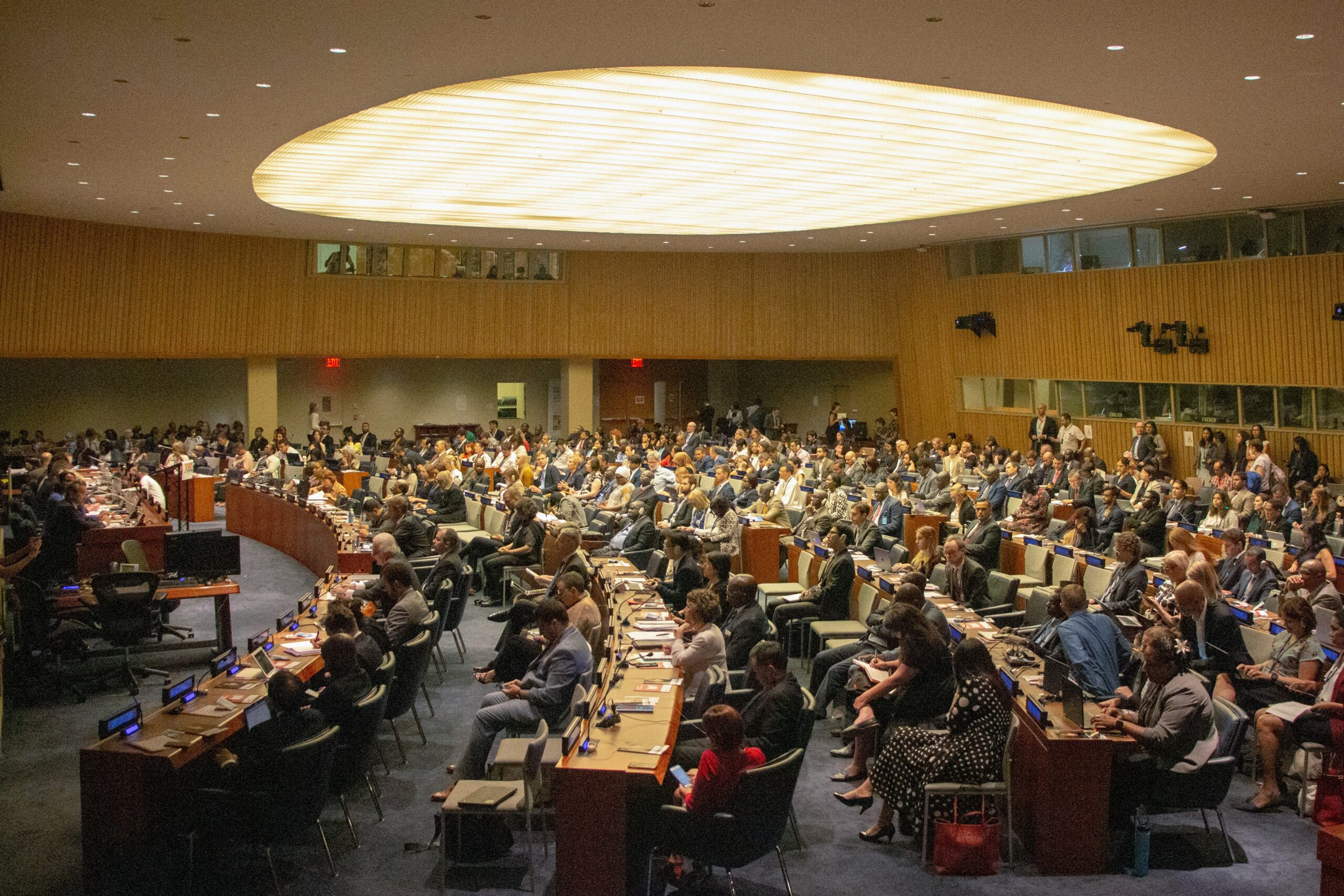
The Ruff Institute of Global Homelessness at DePaul University (IGH) works with partners around the world to drive a global movement to define, enumerate, and end homelessness. On April 27, 2022, the IGH team took part in the United Nations Human Settlements Program’s Special Event on Affordable Housing and Ending Homelessness at the UN Headquarters in New York City. 

The IGH team:

Tiffany Connolly, IGH Administration Assistant, BA from DePaul University 

Lydia Stazen, IGH Executive Director, MPP from DePaul University 

Julia Wagner, IGH Program Manager

Below is a short Q&A on the meeting and what it means for our work at DePaul. 

Why was IGH at the UN for this meeting? 

Lydia: IGH has a partnership with the United Nations Human Settlements Programme (UN-HABITAT). Together, we planned a special event to raise awareness of homelessness as an issue that is critical to address if we want to have sustainable cities around the world. 

Who was at the meeting?

Julia: The event was chaired by Maimunah Mohd Sharif, Executive Director of UN-HABITAT. Representatives from IGH’s Vanguard Cities program from Bengaluru, Montevideo, and Tshwane representing national government, civil society, and local universities. There were also representatives from UN member states, including Madagascar, Kenya, Jordan, El Salvador, and mayors from across the world.

What was your experience being at the UN and New York for the first time?

Tiffany: I was thrilled to see our colleagues from Uruguay, India, South Africa, the UK, and New York — meeting some of them for the first time. There’s something really special about convening in person and reinforcing the connections between the work being done on the ground in each country. I found great gratitude in attending UN-HABITAT’s Special Event on Affordable Housing and Ending Homelessness and sharing the powerful ideas that were presented during the event, in real-time, to our larger network via social media

What were some highlights of the meeting?

Julia: Each of the speakers spoke around central themes: the fact that homelessness is solvable, collaboration is critical both on the ground and globally, and the importance of creating urgency around the issue of solving homelessness in their local communities.  It was so great to have the power of international representation and to hear the support on this issue from member states and mayors. You can find out more about the meeting on the UN website and you can watch the event recording.

What are the next steps?

Lydia: IGH will continue to partner with the UN-HABITAT to advocate for homelessness to receive even greater attention within the United Nations, and will offer support to Member States interested in addressing homelessness through policy and practice. 

How does this relate to our work at DePaul to live by Vincentian values?

Tiffany: Community and Collaboration is a core value at DePaul University. IGH is continuously seeking opportunities to unify efforts at the local, national and international levels through intentional partnerships. An essential part of IGH’s mission is to, meaningfully, work alongside people with lived experience of homelessness and other community members who are most impacted by homelessness to catalyze systemic change. As our colleague and the event’s opening speaker, Rob Robinson said, “more people with lived experience of homelessness should be invited to these events to advocate alongside global leaders.”

Favorite Moment of the Trip:

Tiffany: My favorite part of the trip was taking part in the prep meeting between the IGH team and global partners to prepare for UN-HABITAT’s high-level meeting — seeing different partners sharing ideas and discussing ways to strengthen their messages in order to maximize the opportunity to advocate for solutions to homelessness. That was powerful to me.

Lydia: My favorite moment was when Rob Robinson, a person with the lived experience of homelessness, kicked off the meetings with his powerful remarks. Rob said that we have the knowledge to end homelessness – we just need the political will to do it. I couldn’t agree more! 

Julia: My favorite moments were being able to hear our Vanguard City partners share so passionately about their work. I have had many Zoom conversations with our partners about their programs, and it was fantastic to see them in person and hear them speak at the UN on ending homelessness locally and globally.

To learn more about IGH’s global homelessness advocacy, visit https://ighomelessness.org/advocating-for-change/

Launch of the International Journal on Homelessness: What We’ve Learned

IGH Community of Impact Webinar Series

Reese Hagy

23 November 2021

Introducing the International Journal on Homelessness

The most recent installment of the IGH Community of Impact Webinar Series celebrated the launch of the International Journal of Homelessness (IJOH), the first issue of which was published earlier this month. The IJOH is supported by the Ruff Institute of Global Homelessness and Western University in London, Ontario. The IJOH aims to facilitate academic discourse on the phenomenon of global homelessness from a variety of international perspectives. The webinar featured presentations by several contributors to the first issue of the IJOH who discussed their research and participated in a Q&A session. The webinar presentations featured a variety of content, addressing topics such as prevention, lived experience, housing issues, and more. 

IJOH Managing Editor and Western University Associate Professor Abe Oudshoorn delivered the opening remarks for the webinar. Oudshoorn recounted his experience working with people experiencing homelessness while working as a nurse and explained how this led him to understand the importance of systems change in addressing the issue of homelessness. He noted that while homelessness is a complex problem, in that it is influenced by several factors including social and economic conditions and the personal complexity of individuals, the solutions to it are rather straightforward: housing, and where applicable, supports and services that help people maintain housing. Oudshoorn explained that the purpose of the IJOH is to help make these solutions a reality and to hasten this process by providing a space for knowledge and research sharing from different parts of the world, with an intentional focus on countries that tend to be overlooked in this area. 

Research in the First Issue of the IJOH

Examining the needs of persons experiencing homelessness: Bringing the voice of lived experience to policy priorities

Sarah Canham from the University of Utah discussed her research on the needs of homeless people and how they are being addressed through public policy as understood through the perspective of people with lived experience of homelessness. Through interviews with 15 people with lived experience of homelessness, Canham and her co-authors identified several challenges related to housing and shelter policies that could be addressed through public policy and concluded that policymakers should take steps to better align policy responses with the needs and concerns of those who are impacted by homelessness. 

Exploring the use of Hotels as Alternative Housing by Domestic Violence Shelters During COVID-19

Jill Veenendaal discussed research on the use of hotels to house women experiencing domestic violence during the COVID-19 pandemic in Ontario, Canada. Veenendall and two other researchers interviewed women who had stayed in the shelter hotels, shelter workers, and shelter directors to better understand the challenges and benefits associated with this intervention. The researchers found the use of hotels tended to meet the basic shelter needs of many of those who stayed in them and also generally provided them more autonomy than traditional shelter settings. Drawbacks associated with the implementation of the program studied included increased difficulty accessing basic necessities (e.g., food, diapers) compared to shelter settings and a lack of sufficient space over the long-term (e.g.,  if the women were accompanied by children). 

Exit Pathways from Shelters for Homeless People in Montevideo

Thomas Evans from the Ministerio de Desarrollo Social (MIDES) and Universidad de la República in Uruguay presented the findings from a study analyzing the process of shelter users exiting street homelessness. Interviews were conducted with 30 men who had previous contact with the MIDES Street Program (“Programma Calle”) shelter system to better understand the factors that contributed to the ending of their homelessness. Three core types of exit were identified through the study: 1) exit supported by primary networks (e.g., family, friends, acquaintances); 2) independent exit (generally aided by improved income and job opportunities), and 3) institutional support (through more public policy-related means, such as income supports, supportive housing, etc.). 

Advancing a Five-Level Typology of Homelessness Prevention

IJOH Europe Editor-in-Chief Peter Mackie from Cardiff University detailed the characteristics of a five-stage typology of homelesssness prevention developed in collaboration with IJOH Editor-in-Chief Suzanne Fitzpatrick and Jenny Wood from Heriot-Watt University. Their five-stage typology of homelessness prevention underscores the following types of prevention: 1) universal prevention, 2) upstream prevention, 3) crisis prevention, 4) emergency prevention, and 5) repeat prevention. Mackie and his colleagues used the typology to evaluate the efficacy of current homeless prevention policies in the UK and identify areas for change.

The Role of Universal Basic Income in Preventing and Ending Homelessness

The concluding presentation was given by Nick Kerman, PhD from the Centre for Addiction and Mental Health in Toronto, Ontario. Kerman discussed the role of universal basic income (UBI) in preventing and ending homelessness and highlighted the potential risks and benefits associated with implementing a UBI. While Kerman acknowledged that UBI would not eradicate homelessness on its own, he argued that there is reason to believe that it could act as a complement to current programs and income supports targeting homelessness and called for more research to be done on this topic.

You can access resources and additional information about this webinar series on IGH’s Community of Impact website. To learn more about the International Journal on Homelessness, visit their website. You can watch the full webinar video on Youtube.