
Bringing Vanguard Cities Together
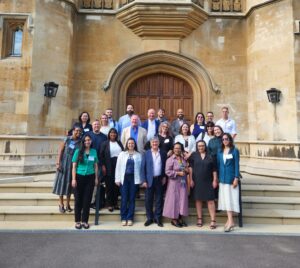 We recently hosted the 2026 IGH Vanguard Summit in London, bringing together city leaders and global partners in the framework of our Vanguard Program. The IGH Summit convened representatives from 12 cities, including Adelaide, Buenos Aires, Cape Town, Glasgow, Greater Manchester, Lisbon, Montevideo, Santiago, São Paulo, Sydney, Tshwane, Ulaanbaatar, and partners from across the United Kingdom.
Welcoming the Vanguard representatives, Baroness Louise Casey of Blackstock emphasized that “the importance of the city’s work is as important to us today as it was in 2017 [when the Vanguard Program was created], and so the more we can learn from each other and from action in reality the better.”
Alongside the IGH Summit, participants also attended Homewards’ three-year anniversary event and visited the local organization The Passage. Across two days of discussions, a clear message emerged: while homelessness looks different across contexts, the principles for preventing and ending it are consistent. Coordinated systems, housing-led approaches, prevention, data, lived experience, and collaboration across sectors were recurring themes in every conversation.
Below are major themes we heard throughout the Vanguard Summit:
1. Data and Definitions – Strengthening Measurement and Accountability
There is growing international momentum toward more consistent definitions and measurement of homelessness, alongside a stronger focus on tracking meaningful outcomes rather than outputs. This includes work at the United Nations to standardize definitions, and cities thinking through key performance indicators to track outcomes. Several places demonstrated the power of setting ambitious, measurable goals and alignment of systems around the outcomes that matter most to people experiencing homelessness. Discussions highlighted the growing potential of data and artificial intelligence to improve early intervention. We heard an important ethical debate around potentially biased or harmful personal data use and discussed the importance of using available data effectively.
2. Leadership and Collaboration – Driving Sustainable, Systems Change
Effective responses combine strong national leadership with local action, empowering communities and people with lived experience to shape policy and deliver targeted solutions. Successful systems are anchored in a shared vision, common data, and continuous improvement, enabling partners to coordinate their efforts and measure progress. Strengthening communication, information sharing, and referral pathways are critical to aligning services and ensuring people receive the support they need. Success also depends on broad partnerships that extend beyond one government department and homelessness services to partnerships across ministries and sectors including businesses, education, healthcare, carceral, and other sectors, particularly to strengthen homelessness prevention.
3. Prevention – Shifting Systems Away from Crisis
While prevention is now firmly embedded in the global conversation, homelessness systems remain heavily focused on emergency shelters and crisis responses. Shifting services to prevention-focused systems was a major theme of the Summit. Vanguard cities are at different stages of scaling prevention services, from pilots, to analyzing data to identify drivers and common risk factors of homelessness, to embedding in city and national plans. Scaling prevention requires shifting resources upstream, creating mechanisms to identify at-risk indivudals, investment in holistic, person-centered approaches to support at-risk individuals, such as strengthening access to secure employment, in order to ultimately reduce the risk of homelessness before it occurs.
4. Housing – Scaling Services and Supply
Housing-led responses are foundational to any homelessness system across the globe. Housing outcomes improved in cities when paired with healthcare, employment, education, social inclusion, and other wrap-around supports. An important element in improving housing stability for clients is integration, building relationships, and trust. The challenge is to not create more institutions but a system that coordinates, empowers, and delivers. Discussions also highlighted the need to increase affordable housing supply, strengthen housing rights and protections, improve housing quality, expand Housing First and alternative housing options, and measure success through long-term housing stability and well-being rather than housing placement alone.
Despite diverse contexts, the Summit highlighted a shared commitment to preventing and ending homelessness. The event showcased diverse experiences, including those of First Nations communities, migrants and refugees, single-parent families, and adolescents. While important differences remain, there were striking similarities in the underlying challenges and the principles of effective responses. Throughout the Summit, participants underscored the value of learning from one another, adapting proven approaches to local contexts, and translating policy into practice. Cities are powerful agents of change and they continue to demonstrate that meaningful progress on homelessness is possible, even when national trends are moving in the opposite direction.
Event Recap
Centralized Data and Cross-sector Collaboration
Session 1 of the Summit engaged delegates from Cape Town, São Paulo, Tshwane, and Sydney in a thoughtful conversation on how cities are centering data and collaboration to drive change. Representing the Australian Alliance to End Homelessness (AAEH), Katie Feeney discussed Sydney’s efforts to strengthen its By-Name-List and better allocate resources: “It was only when we focused on and supported communities that we started having an impact.”
Our newest Vanguard City, Cape Town, underscored the importance of a social approach to the homelessness response. “We work closely with social development partners because everyone plays a key role in addressing and ending homelessness,” said Megan Pangeni, Head of the Street People Programme at the City of Cape Town. Similarly, São Paulo highlighted how a social approach is helping the city understand and build trust with people experiencing homelessness, as explained by Barbara Piccirilli de Araujo from the Prefeitura Municipal de São Paulo. Based on its census data, the city has designed targeted programs for specific group populations.
Building on the theme of data and partnerships, Ntombikayise Zulu, Director of Community Impact at the City of Tshwane, described the city’s commitment to measuring and reporting on homelessness, noting that “if you see the progress that the city has made, you can clearly see the value of its long-standing partnership with IGH since 2018.”
Prevention and Systems Change
Despite being an emerging theme in the global conversation, effective preventive initiatives remain small scale and displaced in the priorities by emergency provision and crisis responses.
IGH Executive Director, Peter Mackie, emphasized that “people need support to make sure that homelessness does not happen again,” highlighting that the Five-Stage Typology presented “is for us to think about what we are doing” and reflect on how systems can better intervene before people experience homelessness.
In our second session, participants explored opportunities and challenges to improve homelessness prevention and housing responses. Alex Reid, Director of Homelessness Systems and Partnerships at the South Australian Department of Human Services, emphasized data-driven collaboration and the role of Advance to Zero in strengthening service coordination and reducing rough sleeping, but indicating that limited housing supply remains a key challenge.
María Fernanda Reyes, Deputy Secretary of Human Potential at the Ministry of Human Development and Habitat of Buenos Aires, highlighted how coordinated governance across public, private, third, and community sectors is crucial to respond to the growing complexity of homelessness. She stressed the need for pathways to employment, housing, and long-term stability, noting “we are the bridge between two worlds, those who are searching for jobs and those who can offer them because there are fewer social connections when you are the most vulnerable.”
A common theme across the discussion was the need to move beyond emergency responses toward coordinated systems that place people at the center. Building on this, João Marrana, Head of Rough Sleeping at the Câmara Municipal de Lisboa, shared how the city is rethinking its system not to create new institutions but to ensure existing ones work as a unified “model that coordinates, empowers, and delivers.”
Closing the session, Jaime Lavín, Chief of the National Street Office, Ministry of Social Development and Family of Chile, recognized the shared issue of a fragmented system. Lavín described Chile’s efforts to strengthen local leadership in coordinating housing, health, education, employment, and Housing First services, creating greater opportunities for prevention.
From Local to Global
Bridging local action with global learning, Session 3 explored how communities across the United Kingdom are driving change to prevent and end homelessness and what lessons can be adapted in cities around the world.
One panel featured Councillor Grace Williams, Leader of the London Borough of Waltham Forest and former Deputy Chair of London Councils; Stephen Aldridge CB, Chief Analyst, Chief Economist and Director of the Analysis and Data Directorate at the Ministry of Housing, Communities and Local Government; and Matt Harrison, Deputy Chief Executive at Homeless Link. The conversation highlighted that prevention requires coordinated governance, up-to-date data, investment in social housing, and trust between communities and institutions.
The second panel brought together Michael Hughes, Principal of Homelessness and Temporary Accommodation at the Greater Manchester Combined Authority; Sarah Alonge from Homewards Lambeth; and Enrik Noka, Senior Economist at Westminster City Council. Together, they explored how prevention is most effective when it integrates housing with employment, mental health, income support, and social connections.
Human-rights Approaches
During the Summit, we also had the opportunity to hear from The UN Special Rapporteur on the Right to Adequate Housing, Koldo Casla, who outlined his mandate and priorities, explaining that
[the right to adequate housing] “is about localizing the right to housing, making it meaningful at the local level, which is, at the end of the day, where it matters.”
Cities are therefore key agents in turning commitments into lasting change. In Scotland, a world-leading homelessness legislation establishes a legal right to accommodation, but this mandate must be matched by effective implementation. Councillor Allan Casey, City Convener for Workforce, Homelessness and Addiction Services of the City of Glasgow, reflected on the city’s success in keeping rough sleeping low through coordinated support, but noted that pressures on temporary accommodation and social housing supply.
In Uruguay, legal commitments to prevent deaths on the streets are in place, but meaningful implementation requires a comprehensive, rights-based approach. On the country’s situation, Fiorella Ciapessoni, from the Universidad de la República, highlighted the long-standing advocacy of people with lived experience of homelessness to reclaim and advance their rights, emphasizing that solutions require permanent housing programs, stronger prevention, and coordinated support for people leaving institutions, such as prisons, to break the cycle of homelessness.
Other contexts are working to strengthen legal protections and reform social welfare systems. Otgonbileg Yura, Director of the Social Welfare Policy Department at the Ministry of Family, Labor, and Social Protection of Mongolia, shared about their efforts to pass legislation that expands support to people experiencing homelessness. She emphasized the importance of assisting people leaving institutions and families at risk of homelessness, strengthening locally funded services, and incorporating lived experience.
Advancing the Global Response
“Preventing and ending homelessness is achievable, and the work at the city level is what really is driving the global movement to end homelessness, so the learning, the innovations, and the strategies that are happening at the city level and working up towards the national level are what we are looking to capture,” said IGH Program Director, Julia Wagner, during the 10th Vanguard Summit held in London.
With cities as agents of change, strengthened by supportive national leadership and international exchange, IGH remains committed to bringing global attention to the issue, fostering shared learning, and accelerating action.
We extend our heartfelt thanks to our city partners for their leadership, commitment, and tireless efforts to drive meaningful change and advance solutions to prevent and end homelessness in their communities. We are deeply grateful for their willingness to share their experiences, innovations, and lessons, strengthening a global movement to prevent and end homelessness. We also thank Homewards for their valued partnership and collaboration in bringing together leaders, practitioners, and communities to inspire action and accelerate progress.